

A standard polyethylene tarp lasts 30 to 60 days, a heavy-duty polyethylene tarp lasts 30 to 90 days, and a vinyl tarp can hold up 3 to 6 months, but in Tulsa, intense UV exposure, high winds, and repeated spring storms can shorten all of those timelines. What works for 2 months in a mild climate may start breaking down in weeks here.
The risk cuts both ways. Leave a failing tarp too long, and water gets in, soaking the roof decking, insulation, and framing. But there’s also an insurance clock to watch. Many homeowner policies set deadlines as short as 12 months for filing storm damage claims or completing repairs, and a deteriorating tarp does not pause that window.
This article covers tarp lifespan by material type, how Tulsa’s climate affects each one, what your insurance policy timeline may require, and how to decide between re-tarping and scheduling permanent repairs before more damage sets in.
*Please note, price ranges listed in this article may not reflect the final cost of your project. Prices are subject to change based on various factors such as local labor rates, material quality, and more. All costs established in this article are rough estimates based on average industry rates.
How Long Does Each Type of Roof Tarp Last, and Which One Should You Have?
A standard 6 mil polyethylene tarp lasts 30 to 60 days, while vinyl tarps last 3 to 6 months, but the right choice depends on your timeline, budget, and how long your roof needs protection.
| Tarp Type | Estimated Lifespan | UV Resistance | Wind Resistance | Approx. Cost per 100 Sq Ft | Suitable for Tulsa |
|---|---|---|---|---|---|
| Standard polyethylene (6 mil) | 30 to 60 days | Low | Moderate | $5 to $15 | Yes short-term |
| Heavy-duty reinforced polyethylene | 30 to 90 days | Moderate | High | $15 to $30 | Yes, preferred emergency option |
| Vinyl | 3 to 6 months | High | High | $30 to $60 | Yes, best for extended coverage |
| Canvas | Up to 12 months | Moderate | Moderate | $60 to $100+ | Limited, rarely used residentially |
Heavy-duty reinforced polyethylene, the standard deployed by Tulsa emergency tarping contractors after severe storms, is rated for 30+ days of UV exposure and offers the best mix of fast installation, wind resistance, and low cost. Canvas tarps can last up to 12 months under favorable conditions, but are rarely used in residential emergency work because of high costs and installation complexity. For jobs that need more than 60 days of protection, vinyl tarps at 3 to 6 months represent the best balance of lifespan and cost.
What Makes a Roof Tarp Fail Faster in Tulsa’s Climate?
Six specific factors shorten roof tarp lifespan in Tulsa faster than the standard 30 to 90 day estimates suggest, and most of them hit hardest during spring storm season.
- High UV exposure: Tulsa averages a summer UV index of 9 to 10, which accelerates polyethylene breakdown and can push a standard tarp’s lifespan well below its 30 to 60-day rating.
- Damaging winds: Spring thunderstorms in Tulsa regularly produce winds of 50 to 70+ mph. Improperly secured tarps can be ripped loose within days, and a loose tarp dragging across shingles causes additional damage to the surface of the roof and deck beneath it.
- Repeated hail strikes: Hail is common across Tulsa’s storm season. Multiple hailstorms can puncture standard polyethylene tarps, turning small holes into larger failures with each future storm.
- Temperature cycling: Tulsa temperatures swing from winter lows in the 20s to summer highs in the 90s. That range causes tarp material to expand and contract repeatedly, loosening fasteners and opening gaps along edges and seams.
- Heavy annual rainfall: With 40 to 45 inches of rain per year concentrated in spring, tarps face sustained water weight and pooling risk, especially on lower-slope sections of a roof. If water reaches the decking, homeowners should consider the condition of the wet roof underlayment before assuming the tarp has fully protected the underlying materials.
- Complex rooflines on older homes: Many older Tulsa homes have multiple ridges, valleys, and gaps. Each one is a potential seam point where a tarp can gap, lift, or allow water to work underneath.
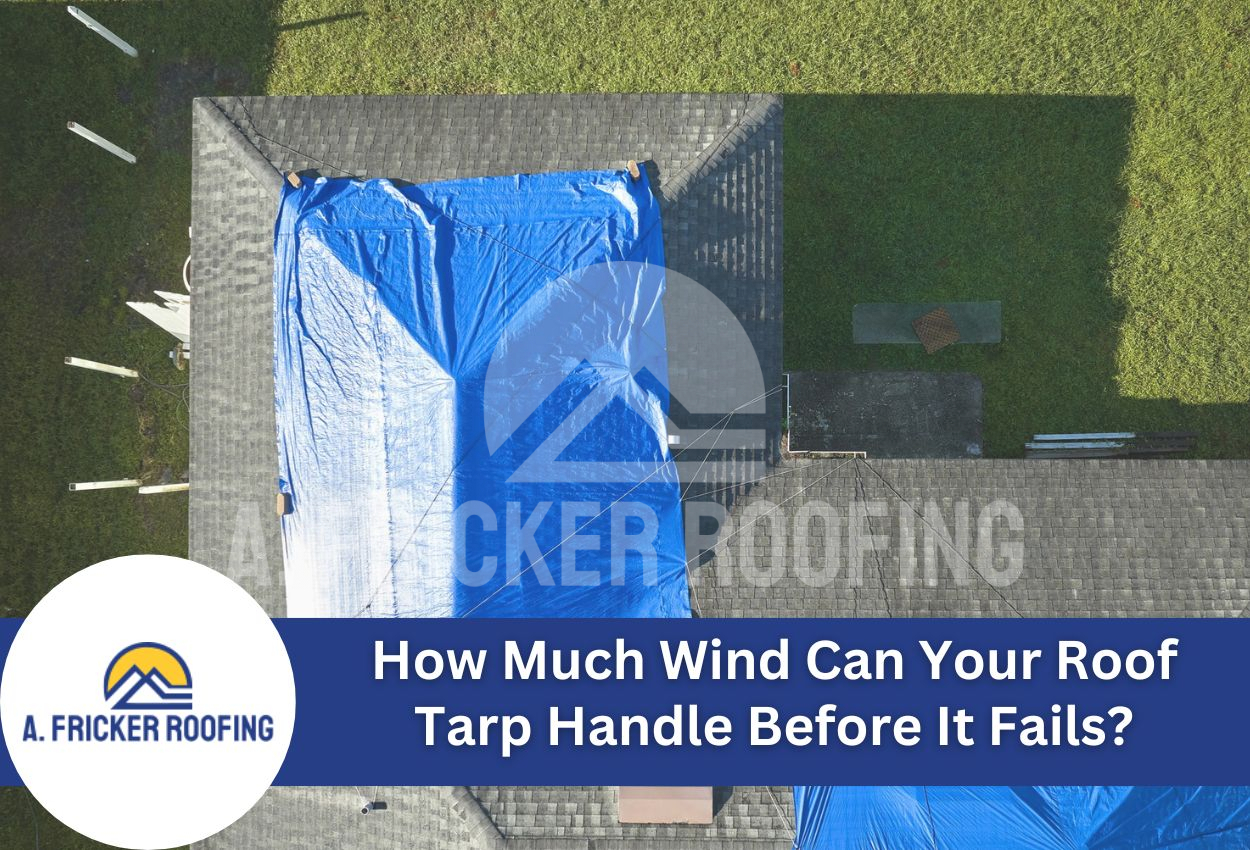
Professional installation using boards and fasteners rather than rope tie-offs extends tarp life meaningfully under Tulsa wind conditions. Tarps left beyond approximately 90 days also risk trapping moisture against the roof decking, which can lead to wood rot during Tulsa’s humid late spring and summer months. If repairs cannot be completed within that window, re-tarping or upgrading to a longer-lasting material is the safer path. These roof safety considerations should be reviewed before anyone accesses or works around a damaged, tarped roof.
Does Insurance Set a Deadline for How Long a Tarp Can Stay on Your Roof?
Most homeowners’ insurance policies require the insured to begin permanent repairs within 30 to 90 days of a covered loss, and leaving a tarp beyond that window without documented repair progress can give an insurer grounds to deny additional damage claims as maintenance neglect rather than storm damage.
Oklahoma insurance carriers generally require policyholders to reduce damage immediately after a storm. That means placing a tarp quickly, but it also means keeping records. Emergency tarping costs, both labor and materials, are typically reimbursable as part of a storm damage claim when backed by photos, contractor invoices, and the date the tarp was installed. Collect that documentation within 24 to 48 hours of tarp installation, before weather or additional damage changes the condition of the roof. A photo showing the storm damage underneath the tarp, dated the same day as installation, is far more useful to an adjuster than photos taken a week later.
The question of how long insurance allows a tarp on a roof does not have a single answer: it depends on the carrier and the specific policy language. Some policies are more flexible than others, but waiting past 90 days without documented progress puts coverage at risk regardless of the tarp’s condition. Contact your adjuster within 7 days of storm damage to confirm your policy’s exact timeline and avoid disputes down the road. A tarp may hold for 30 to 90 days, depending on the material, but an insurance claim for storm damage does not pause while the tarp sits on the roof.
When Should You Replace a Damaged Tarp vs. Schedule Permanent Roof Repairs?
Replace a tarp immediately if it has been in place for more than 60 days (standard poly) or 90 days (heavy-duty), or if a new storm has caused any breach, and move straight to permanent repairs if your insurance adjuster has completed the estimate and a contractor can schedule work within 2 to 4 weeks.
- Tarp age has passed its rated lifespan: A standard polyethylene tarp older than 60 days or a heavy-duty tarp older than 90 days should be replaced before the next storm, even if no visible failure is obvious yet.
- UV bleaching or surface cracking is visible: Whitening, chalking, or cracking in the tarp material means the UV resistance is gone. The next rain or windstorm can finish it off fast.
- Any edge lift is detected: Wind-driven edge lift, even partial, means water can work underneath the tarp. Re-tarping is less expensive than replacing water-damaged roof decking.
- A new storm hit the roof: Any tarp that has sustained hail impact, puncture, or edge separation in a new storm should be inspected within 24 hours. Replace it immediately if any breach is found, regardless of how recently it was installed.
- The insurance adjuster has completed the estimate. Once your adjuster finishes the estimate and a contractor can schedule permanent residential roof repairs within 2 to 4 weeks, re-tarping is rarely worth the cost.
Re-tarping a standard residential section in the Tulsa area typically runs $200 to $500. Permanent repair costs average $1,500 to $8,000 or more, depending on the damage scale. With Tulsa’s highest storm risk concentrated between April and June, any tarp showing signs of failure before that window closes should be replaced or upgraded, not monitored and hoped for. Waiting costs more than acting early.
What Does Emergency Tarping Cost and How Does It Compare to Delaying Repairs?
Professional emergency tarping costs $300 to $700 upfront, but delaying action beyond 90 days can push total costs to $15,000 or more once interior water damage and structural remediation are factored in.
| Scenario | Upfront Cost Range | Est. Additional Damage Cost (90+ Day Delay) | Total Cost Range | Recommended Action |
|---|---|---|---|---|
| Professional emergency tarping | $300 to $700 | $0 to $500 (if repaired on time) | $300 to $1,200 | Tarp quickly, schedule permanent repair within 90 days |
| Re-tarping after tarp failure | $200 to $500 (plus $500 to $3,000 new interior damage) | $500 to $3,000 | $700 to $3,500 | Replace failed tarp immediately, begin repair scheduling |
| Delayed repair with water intrusion | $0 upfront (no tarp placed) | $2,000 to $15,000+ in structural and interior remediation | $2,000 to $15,000+ | Do not delay, contact a licensed contractor fast |
A licensed roofing contractor’s emergency tarp installation typically costs $150 to $350 more than a DIY tarp setup, but improper DIY installation raises the risk of tarp failure and water intrusion that insurers may refuse to cover as a secondary claim. The cost of professional tarping combined with a fast hail damage roof repair is consistently lower than the combined cost of re-tarping, interior water damage remediation, and insurance claim complications that pile up beyond the 90-day window. Acting fast after storm damage is the single most effective way to keep total repair costs manageable.
Ready to Protect Your Tulsa Home? Here’s How to Take the Next Step Today.
A roof tarp’s clock starts the moment it goes on, and with Tulsa’s spring storm season running from April through June, the window between storms is narrow. Professional documentation of tarp installation from day one supports your insurance claim and helps avoid the disputes that pile up past the 90-day mark.
A. Fricker Roofing and Waterproofing serves homeowners across the Tulsa area with fast emergency tarping and full roof repair services. Getting a licensed contractor on-site quickly protects both your home and your claim.
Schedule your free roof inspection.
Not ready to schedule? Learn more about emergency tarping services.