
What Is the Cheapest Siding Option for Tulsa Homeowners on a Budget?
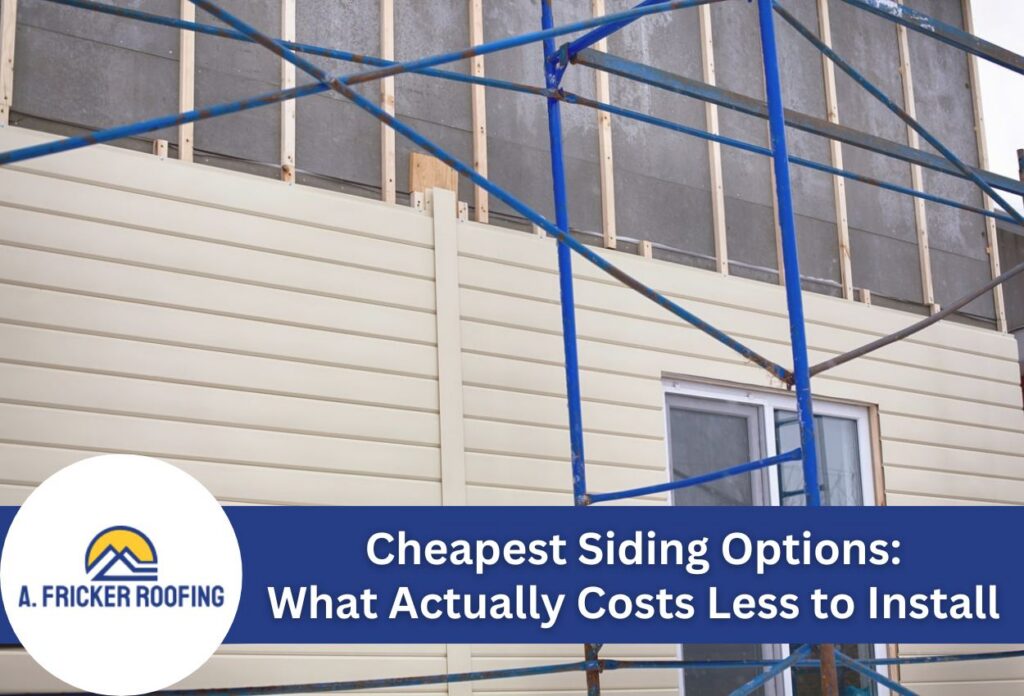

Vinyl siding is the cheapest siding option for most Tulsa homeowners, running $3 to $8 per square foot installed. That lower upfront cost makes it the most common starting point for budget-focused projects. This post ranks four popular siding materials by total installed cost, so homeowners can compare real numbers before calling a contractor.
In Tulsa, “cheap” doesn’t always mean good value. NWS Tulsa climate summary with seasonal hazards shows hail season runs March through June, humidity stays high all summer, and freeze-thaw cycles in late winter put stress on exterior materials every year. A material that costs less upfront but cracks, warps, or molds within 5 years ends up costing more in the long run.
*Please note, price ranges listed in this article may not reflect the final cost of your project. Prices are subject to change based on various factors such as local labor rates, material quality, and more. All costs established in this article are rough estimates based on average industry rates.
How Much Does Each Siding Material Cost to Install, and Which Is Cheapest?
Vinyl is the cheapest siding option at $3 to $8 per square foot installed, while fiber cement runs nearly double that at $8 to $13 per square foot.
| Material | Installed Cost per Sq Ft | Average Cost for 1,500 Sq Ft Home | Lifespan (Years) |
|---|---|---|---|
| Vinyl | $3 to $8 | $4,500 to $12,000 | 20 to 40 |
| Engineered Wood | $5 to $10 | $7,500 to $15,000 | 20 to 30 |
| Wood Lap | $6 to $12 | $9,000 to $18,000 | 20 to 40 |
| Steel | $7 to $12 | $10,500 to $18,000 | 30 to 50 |
| Fiber Cement | $8 to $13 | $12,000 to $19,500 | 25 to 50 |
On a typical Tulsa ranch-style home with 1,200 to 1,500 square feet of siding, vinyl can save homeowners $3,000 to $7,500 compared to fiber cement on material and labor alone. That gap is large enough to cover several years of routine maintenance on the lower-cost option. Tulsa permit fees add another $100 to $500 to any project budget, and local inspections specifically check for wind-rated attachment methods, so factor both into total cost comparisons before deciding.
What Are the Cheapest Siding Options That Still Hold Up in Tulsa’s Weather?
Mid-grade vinyl, entry-level engineered wood, and fiber cement are the three budget siding options for Tulsa homes that can realistically handle Tulsa’s hail, humidity, and UV exposure. Each sits at a different performance level, and the right choice depends on your home’s age, wall condition, and which weather threats matter most to you.
| Material | Impact Resistance (Hail) | Moisture Resistance | UV Fade Resistance | Typical Warranty (Years) |
|---|---|---|---|---|
| Mid-Grade Vinyl | Medium | Medium | Medium (UV-stabilized grade) | 20 to 40 |
| Engineered Wood | Medium | Medium to High | High (factory-primed) | 20 to 30 |
| Fiber Cement (entry-level) | High | High | High | 30 |
Many Tulsa homes built in the 1960s through the 1980s have slightly uneven or irregular wall surfaces after decades of settling. Engineered wood panels can be installed over those surfaces with less prep work than fiber cement, which often needs a flatter, more uniform base before installation. That reduced labor can lower total installed cost enough to make engineered wood the better budget pick on older homes, even though fiber cement scores higher on durability.
Entry-level vinyl is tempting at $3 to $4 per square foot installed, but south- and west-facing walls in Tulsa’s high-UV summers can show fading or warping within 10 to 15 years without UV-stabilized grades. Mid-grade vinyl at $5 to $7 per square foot installed holds its appearance longer and is a better value starting point for Tulsa homeowners than the cheapest option on the shelf. Before purchasing any material, check whether the product grade qualifies for the full warranty term listed by the manufacturer.
What Is the Least Expensive Siding to Install, and What Are the Hidden Costs?
Vinyl is the least expensive siding to install at the labor level, with installation labor averaging $3 to $8 per square foot versus $8 to $13 per square foot for fiber cement, which requires more cutting and weighs significantly more per panel. But the base labor rate is rarely the final number. Several hidden costs routinely inflate what looks like a budget-friendly siding job.
- Old siding removal: Stripping existing siding adds $0.50 to $1.50 per square foot to the total cost, which is $750 to $2,250 on a 1,500 square foot home before a single new panel is installed.
- Sheathing or OSB replacement: If rot or moisture damage is found behind the old siding, replacing deteriorated sheathing runs $2 to $4 per square foot. Older Tulsa homes are more likely to have this problem.
- Moisture barrier or house wrap: A proper weather-resistive barrier adds $0.25 to $0.75 per square foot. Skipping it in a humid climate is not recommended.
- Trim and corner pieces: Matching trim, J-channel, and corner caps typically add 10% to 15% to total material costs, an easy line item to underestimate early in the bidding process.
- HOA approval fees or required upgrades: HOA neighborhoods in south and east Tulsa suburban developments often restrict vinyl to specific profiles or colors. A non-compliant material selection can force an upgrade to a higher cost tier or require repainting, erasing any savings from choosing vinyl in the first place.
The real installed cost of “cheap” siding is almost always higher than the base material and labor rate suggests. Getting a line-item quote that breaks out removal, sheathing inspection, house wrap, and trim will give a much more accurate budget number than any per-square-foot estimate alone.
Which Cheap Siding Option Is the Right Fit for Your Specific Situation?
Finding the most affordable siding material for a home is not a single answer. The right choice depends on three variables: your project timeline, any HOA rules in your neighborhood, and whether storm damage insurance factors into your budget math.
- Tightest budget with a short-term horizon: Choose entry-to-mid vinyl at $3 to $7 per square foot installed. If you plan to sell within 5 to 10 years or need to keep upfront costs as low as possible, standard mid-grade vinyl delivers acceptable performance without the higher material and labor costs of other options.
- Budget with storm-prone exposure: Choose steel siding or impact-rated vinyl with a Class 4 hail rating. Impact-rated vinyl runs $1 to $2 per square foot more than standard grades, but Oklahoma homeowners in storm zones may qualify for a 20% to 30% discount on homeowner’s insurance premiums, an offset that can recover that added cost within a few years.
- Older home needing a full renovation with uneven walls: Choose engineered wood panels at $5 to $10 per square foot installed. Homes built before 1985 often have settled or irregular wall surfaces that require less prep work for engineered wood than for fiber cement, keeping total labor costs lower on a full residence.
- HOA-restricted neighborhood needing a mid-cost appearance match: Choose entry-level fiber-cement lap siding. Many HOAs in south and east Tulsa suburban developments prohibit certain vinyl profiles. Entry-level fiber-cement lap starts around $8 per square foot installed and meets most HOA profiles and finish requirements without jumping to premium product tiers.
Match your scenario to the option above before requesting quotes. A line-item bid that reflects your actual situation will always be more accurate than a general per-square-foot estimate.
Does Choosing Inexpensive Siding Now Actually Save Money Over 10 to 20 Years?
Over 10 years, entry-level vinyl does cost less in total, but that advantage shrinks or disappears entirely by year 20. The math depends on which material you compare and how long you plan to stay in the home.
Take a 1,500 square foot home as a baseline. Entry-level vinyl installed at $4 per square foot runs about $6,000 upfront. Add $500 to $1,000 in repairs and touch-ups over 10 years, and the total 10-year spend lands around $6,500 to $7,000. Fiber cement at $10 per square foot installed costs $15,000 upfront, but carries near-zero maintenance costs over that same period. The 10-year gap in favor of vinyl is roughly $8,000. That is a real and meaningful difference for any homeowner watching a project budget.
The frame shifts at 20 years. Vinyl installed at the entry-level grade often needs full replacement between years 15 to 20, putting another $6,000 to $12,000 back on the table. Fiber cement and steel lifetimes can run 30 to 50 years with minimal upkeep, meaning the material installed today is likely still performing when vinyl would be getting replaced a second time. By the 20-year mark, the total cost gap between entry-level vinyl and a longer-lasting material can close entirely or reverse.
For older Tulsa homes already past one siding cycle, the best ROI often falls in the middle. Engineered wood at $5 to $10 per square foot installed hits a sweet spot between low upfront cost and a 20-to-30-year service life, making it a practical fit for the secondary goal of finding inexpensive siding options for old houses that won’t need replacing again in a decade. Homeowners who discover underlying moisture damage during a residence may also want to review residential waterproofing services to address any leak issues before new siding is installed.
Ready to Get an Accurate Quote on Affordable Siding in Tulsa?
Choosing a longer-lasting material now can close the cost gap within 20 years, but only if the installation is done right the first time. A. Fricker Roofing and Waterproofing serves Tulsa and surrounding areas with CIB-licensed contractors who meet Oklahoma’s requirements for siding work valued over $1,000. Tulsa’s storm season runs March through June, and scheduling before that window helps avoid backlog and locks in current material pricing. Homeowners dealing with recent storm damage can also explore hail damage roof repair services to address any related exterior issues at the same time.
Request your free siding estimate from A. Fricker Roofing and Waterproofing today, or learn more about siding and exterior services for Tulsa homes.