
Ways to Maintain a Commercial Roof and Extend Its Lifespan
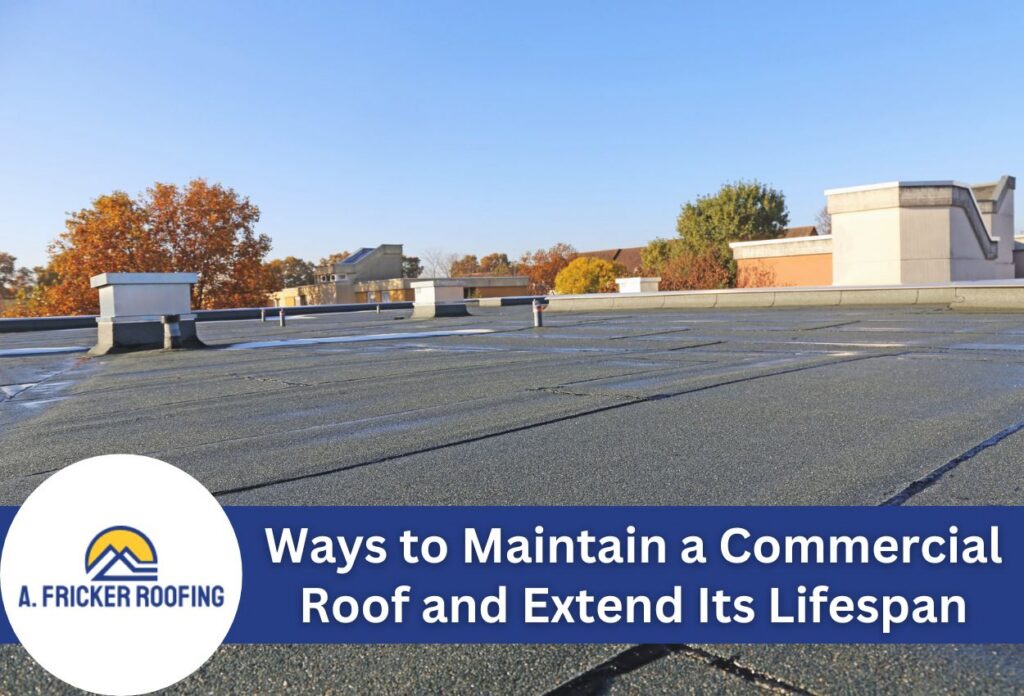

Commercial roofs in Tulsa need inspections at least twice a year, plus after any major storm, to reach their full 20 to 35-year lifespan. Tulsa’s climate is hard on roofing materials. Annual rainfall around 40 inches, summer UV index values above 10, and winter lows that drop into the 20s create a cycle of heat, moisture, and freezing that breaks down even well-installed roofs ahead of schedule.
The most common commercial roofing materials in Tulsa, EPDM, TPO, and modified bitumen, are built to last decades, but only with consistent upkeep. Most manufacturer warranties require documented maintenance to stay valid. Skip that maintenance, and a roof that should last 30 years may fail in 15.
This article covers the five core practices that protect commercial roofs in Tulsa: scheduling regular inspections, keeping drainage systems clear, removing debris, checking seams and membranes, and bringing in a professional for thorough annual servicing.
*Please note, price ranges listed in this article may not reflect the final cost of your project. Prices are subject to change based on various factors such as local labor rates, material quality, and more. All costs established in this article are rough estimates based on average industry rates.
How Often Should a Commercial Roof Be Inspected to Stay Ahead of Damage?
The National Roofing Contractors Association recommends quarterly visual inspections for low-slope commercial roofs, plus two professional assessments each year. Most EPDM and TPO manufacturer warranties go further, they require at least one documented professional inspection annually, or the warranty becomes void. Skipping that professional visit doesn’t just risk roof damage; it can cancel the warranty coverage you’re counting on.
| Inspection Type | Frequency | Typical Cost Per Visit | What It Catches |
|---|---|---|---|
| Owner Visual | Every 3 months | $0 | Obvious ponding, visible debris, exposed seams, and standing water in drains |
| Professional Assessment | 2 times per year | $200 to $500 | Membrane blistering, seam splits, flashing failures, and hidden moisture intrusion |
In Tulsa, timing those two professional inspections around the local storm calendar matters. Schedule the first in late February or early March, before spring hail season runs from March through May, and before wind gusts of 50 to 60 mph start stressing seams and flashings. Schedule the second in October, before freeze-thaw cycles begin cracking membranes weakened by summer UV exposure. Those two windows give a professional enough time to catch damage and complete repairs before the most punishing weather arrives.
What Does a Commercial Roof Maintenance Checklist Actually Cover?
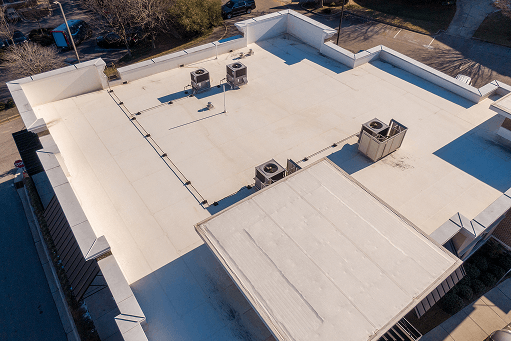
A complete commercial roof maintenance checklist covers 7 to 9 core tasks, each tied to a measurable standard, not just a general reminder to “look for problems.” For flat and low-slope roofs, which are the most common commercial roof type in Tulsa, several of these tasks are non-negotiable after every major weather event.
- Clear debris within 24 to 48 hours after a storm. Leaves, branches, and hail fragments block drains fast. On flat roofs, even a small blockage can cause ponding within hours.
- Confirm drainage clears standing water within 48 hours. Ponding beyond 48 hours accelerates membrane degradation on flat and low-slope roofs. This is the single most common cause of early membrane failure.
- Inspect seams and lap joints after any wind event above 50 mph. Seam splits are the most frequent repair need on TPO and EPDM roofs in Tulsa’s storm season, particularly where EPDM roofing materials are exposed to repeated wind and weather stress.
- Check flashing at all penetrations and edges twice a year. Flashing failures around HVAC units, vents, and parapet walls account for a large share of interior water damage in commercial buildings.
- Inspect for mold, blistering, and trapped moisture under membranes every summer. Tulsa’s summer humidity regularly exceeds 60%, making this a required checklist item, not optional. Blisters that go unaddressed through a humid summer almost always worsen by fall.
- Check the membrane surface for UV degradation each October. After a full summer of UV index values above 10, membranes on south-facing sections show the most wear and need to be documented before winter freeze-thaw cycles begin.
- Recoat or reapply reflective surface treatments every 3 to 5 years on built-up and modified bitumen roofs. Commercial roof coatings can help restore reflective properties and provide an additional protective layer when appropriately selected and maintained. Coating breakdown accelerates heat absorption and shortens membrane life.
- Clear interior drains and scuppers every spring and fall. Flat roofs with blocked scuppers can accumulate hundreds of gallons of standing water after a single heavy rain event. (Flat/low-slope roofs only.)
- Document every inspection with photos and written notes. Most EPDM and TPO warranties require a maintenance record. Without documentation, a warranty claim can be denied even when the damage is legitimate.
A standard commercial roof maintenance checklist is not a once-a-year task; it is a seasonal system. Flat and low-slope roofs in Tulsa require the most attention, especially drainage and moisture checks, because standing water and high humidity together are the fastest path to early membrane failure.
What Are the Warning Signs a Commercial Roof Needs Repair Before It Becomes a Replacement?
Catching the signs a commercial roof needs repair early, before damage spreads across the full membrane, is the difference between a $500 patch and a $50,000 replacement. Most repair-versus-replace decisions come down to how many warning signs are present at once and how severe each one is.
- Ponding water that remains after 48 hours. Monitor first, then call a contractor. Standing water beyond the 48-hour mark compresses membranes and accelerates delamination. A single occurrence warrants documentation; two or more events in the same spot require professional repair.
- Seam splits wider than 1/4 inch. Contractor repair required. Splits this size allow water to enter the membrane system directly. On Tulsa roofs exposed to wind gusts above 50 mph, unsealed splits grow fast and will not self-close.
- Blistering larger than 6 inches in diameter. Contractor repair required. Blisters this size indicate trapped moisture or adhesion failure beneath the membrane. Left unaddressed through a Tulsa summer, blisters this large almost always rupture by fall and require more extensive repair.
- Surface granule loss covering more than 10% of the visible area. Contractor assessment required. Granule loss beyond this threshold exposes asphalt-based material to UV. Tulsa’s UV index exceeds 10 regularly in summer, accelerating surface cracking in asphalt systems within 5 to 7 years without protective coating maintenance.
- Interior water stains on ceilings or walls. Emergency call. Staining inside the building means water has already bypassed the membrane and decking. This requires same-day contact with a roofing contractor, not a scheduled inspection.
- Membrane punctures or tears after hail Emergency call. Hail stones of 1 inch or larger, common during Tulsa’s March through May storm season, can puncture TPO and EPDM membranes immediately. Any confirmed hail event of that size warrants a hail damage roof repair professional inspection within 24 hours.
- Flashing gaps or separation at walls and penetrations, Contractor repair required. Gaps at parapet walls, HVAC curbs, or vents wider than 1/8 inch are active entry points for water and should not be monitored, they need repair.
- Surface cracking in a pattern wider than 1/16 inch. Contractor assessment required. Fine crazing is normal aging, but cracking with visible width means the membrane has lost flexibility and is likely within 2 to 3 years of failure without intervention.
Any single sign from the emergency tier requires a call the same day, not a wait-and-see approach. Two or more contractor-tier signs appearing together typically push a roof from repair territory into replacement evaluation.
What Is the Best Way to Extend a Commercial Roof’s Lifespan and Maximize Your Investment?
The best way to extend a commercial roof’s lifespan is consistent, documented maintenance. Spending $1,000 to $2,000 per year on routine upkeep can defer a full replacement by 10 or more years, pushing back a cost that runs $8 to $15 per square foot on most commercial roofs. On a 10,000 square foot building, the replacement bill lands between $80,000 and $150,000. Routine maintenance is the most direct way to protect that investment.
| Maintenance Action | Estimated Annual Cost | Lifespan Extension | Cost of Neglect (Repair or Early Replacement) |
|---|---|---|---|
| Annual Professional Inspection | $300 to $600/year | 3 to 5 years | $5,000 to $20,000 in undetected damage repairs |
| Drain and Scupper Cleaning | $150 to $400/year | 2 to 4 years | $3,000 to $10,000 in membrane damage from ponding |
| Elastomeric Coating Application | $1,500 to $4,000 every 5 to 7 years | 5 to 10 years | $80,000 to $150,000 early full replacement |
Reflective coatings add a second layer of ROI beyond lifespan alone. Reflective TPO or coated EPDM membranes can reduce cooling costs by 10 to 15% during Tulsa’s peak summer months, a real dollar savings that offsets elastomeric roof coating costs over time. Oklahoma’s building code requirements for energy efficiency and wind and hail resistance also influence material choices, making reflective single-ply systems a practical fit for local conditions.
Spending $1,000 to $2,000 per year on maintenance can delay an $80,000 to $150,000 replacement by a decade or more, making routine upkeep the single highest-return investment a commercial property owner can make. A. Fricker Roofing and Waterproofing offers scheduled maintenance programs designed specifically for Tulsa’s commercial roof demands. Call today to set up a plan before the next storm season arrives.
When Should Tulsa Property Owners Hire a Licensed Commercial Roofing Contractor vs. Handle Maintenance Themselves?
Four specific scenarios always require a licensed contractor post-hail assessment, TPO or EPDM seam re-welding, warranty inspection documentation, and any repair involving membrane replacement, while basic upkeep like clearing debris, doing visual checks, and removing leaves from drains can be handled by owners or facilities managers.
- DIY-appropriate: Debris removal and drain clearing. Removing leaves, branches, and standing debris from the roof surface and scuppers after storms is owner-manageable. These tasks require no tools beyond a broom or blower and carry no permit or licensing requirement.
- DIY-appropriate: Visual surface checks after mild weather. Walking the roof to look for obvious pooling or surface changes is reasonable for owners or facilities staff. Document anything unusual with photos, but do not attempt repairs based on what you see.
- Contractor required: Post-hail damage assessment. Any hail event with stones at or above 1 inch common during Tulsa’s March through May storm season requires a licensed contractor inspection within 24 to 48 hours. Hail damage to TPO and EPDM membranes is not always visible to an untrained eye.
- Contractor required: Seam re-welding on TPO or EPDM. Heat-welded or chemically bonded seams cannot be properly re-sealed without professional equipment and training. DIY repairs on seams void most manufacturer warranties, which carry 20 to 35 year coverage terms.
- Contractor required: Warranty inspection documentation. Most EPDM and TPO manufacturers require a licensed contractor to perform and sign off on inspections to keep warranty coverage active. Self-documented inspections are not accepted as valid proof.
- Contractor required: Any repair involving membrane replacement. Partial or full membrane work above a defined scope triggers City of Tulsa building permit requirements and must meet IBC wind and hail resistance amendments adopted by Oklahoma.
Oklahoma’s Construction Industries Board requires commercial roofing contractors to hold a valid state license. Verifying the license before hiring protects property owners from liability and ensures all work meets code. Skipping that verification on a commercial roof repair project risks both warranty loss and work that fails to meet Oklahoma’s wind and hail resistance standards.
Ready to Protect Your Commercial Roof? Schedule a Maintenance Inspection in Tulsa Today
Spending $300 to $600 on a professional commercial roof inspection now can prevent $5,000 to $20,000 in undetected damage repairs later, and late winter or early spring is the best time to act before Tulsa’s March through May storm season arrives. A. Fricker Roofing and Waterproofing works with commercial property owners and facilities managers across Tulsa to catch problems early and keep roofs performing through every season.
Schedule your free commercial roof inspection with A. Fricker Roofing and Waterproofing today or learn more about commercial roofing materials and maintenance options.