
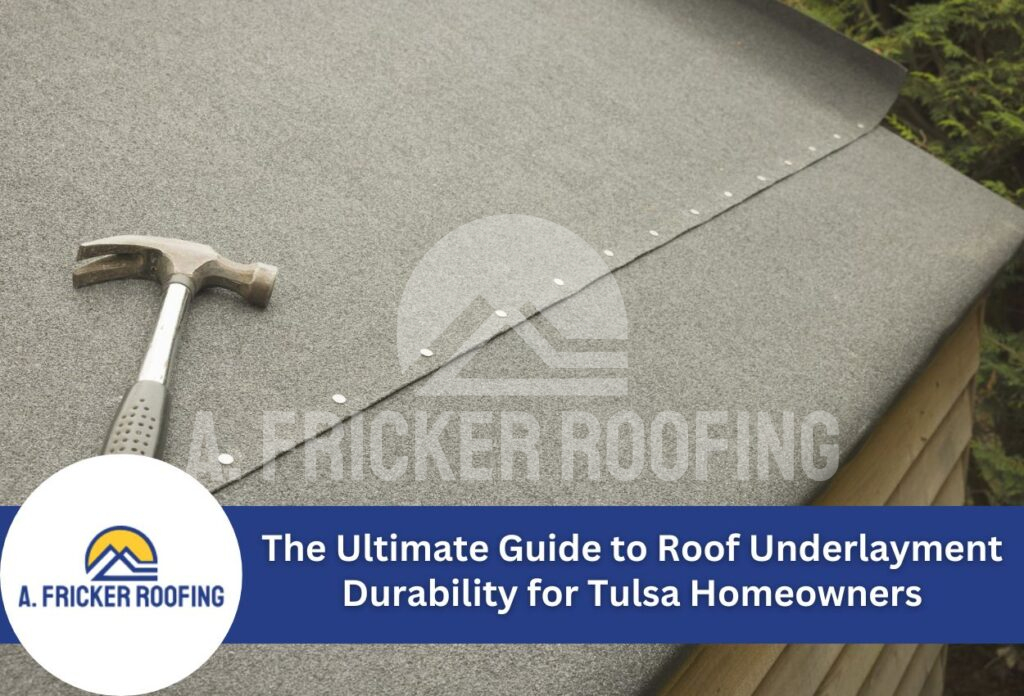
Roof underlayment is a secondary barrier between your home and Oklahoma’s unpredictable weather. When thinking about your roof, you may only focus on the shingles, but the underlayment beneath them plays an equally important role in protecting your Tulsa home.
This part of your roofing system can be the difference between a roof that lasts decades and one that fails prematurely.
For Tulsa homeowners, selecting the right underlayment isn’t just a minor detail — it’s essential protection against our region’s severe weather. From sudden downpours and hailstorms to scorching summer heat and freezing winter temperatures, your roof underlayment must withstand it all. The durability of this protective layer directly impacts how well your entire roofing system performs over time.
Different underlayment materials offer varying levels of weather resistance, longevity, and performance. Understanding the differences between traditional felt and modern synthetic options can help you choose an option that safeguards your home for years to come. Premium underlayment products offer enhanced protection against Tulsa’s high winds, heavy rain, and dramatic temperature fluctuations that can stress roofing materials to their limits.
Investing in high-performance underlayment now can prevent expensive repairs later and significantly extend your roof’s service life in Oklahoma’s challenging climate.
Synthetic vs. Felt Underlayment: A Comprehensive Durability Analysis
Traditional felt underlayment has been the standard in the roofing industry for decades. In Tulsa homes, #15 felt (the thinner option) typically lasts 10 to 15 years, while heavier #30 felt may extend to 20 years under ideal conditions. However, felt underlayment shows significant vulnerability to Oklahoma’s weather extremes. When exposed to moisture, felt absorbs water, wrinkles, and deteriorates rapidly. During Tulsa’s summer heat waves, felt can dry out, becoming brittle and prone to tearing during installation or high winds.
Synthetic underlayments offer a remarkable improvement in durability for Oklahoma roofing projects. This advanced option can withstand Tulsa’s frequent freeze-thaw cycles without breaking down, often lasting the entire lifespan of the roof (over 25 years). Unlike felt, synthetic underlayment remains stable when wet and maintains its integrity through temperature extremes. The tear resistance of synthetic products is typically greater than felt, preventing damage during installation and severe weather events.
For Tulsa homeowners, synthetic underlayment provides superior protection against water infiltration with enhanced slip resistance that improves installer safety. Many synthetic products feature specially designed walking surfaces that reduce accident risks during installation on steep roofs. This combination of durability, weather resistance, and safety makes synthetic underlayment the better choice for protecting homes against the unpredictable climate challenges that Tulsa residents face year-round.
Weather Resistance Factors: How Different Underlayments Perform in Oklahoma
In Tulsa, where summer temperatures regularly exceed 100 degrees Fahrenheit before plunging below freezing in winter, underlayment performance is crucial for roof longevity. Traditional felt underlayments often struggle with these dramatic shifts, becoming brittle in heat and failing to maintain water resistance during freeze-thaw cycles that are common in Oklahoma winters.
Synthetic underlayments demonstrate superior resistance to Tulsa’s challenging conditions. While felt can absorb water, leading to warping and deterioration, premium synthetic options remain water-resistant even after months of exposure. This moisture protection is particularly valuable during Oklahoma’s spring storms and winter ice events, when water infiltration poses the greatest threat to roof structures.
Wind resistance is another important factor for Tulsa homes. Oklahoma’s position in Tornado Alley means underlayments must withstand significant wind speeds. Synthetic products typically feature higher tear strength ratings and secure fastening systems specifically designed for high-wind regions. Many premium underlayments now include specialized adhesive edges that create a continuous barrier against wind-driven rain, which is particularly important during Oklahoma’s severe thunderstorms when winds can exceed 70 mph.
Self-adhering rubberized asphalt underlayments offer exceptional protection for ice-prone areas of Tulsa roofs, preventing the moisture damage that frequently occurs along eaves and in valleys during winter freeze-thaw cycles.
Self-Adhered vs. Mechanically Attached Underlayments: Impact on Long-Term Roof Protection
The method used to secure underlayment to your roof deck significantly affects its performance during Tulsa’s severe weather events. Mechanically attached underlayments rely on nails or staples to hold the material in place. While this traditional approach works in moderate climates, Tulsa’s high winds and heavy rains can stress these attachment points, potentially causing the underlayment to lift, tear, or allow water infiltration between fasteners.
Self-adhered underlayments provide superior protection by creating a continuous, waterproof seal across the entire roof surface. The full adhesion eliminates the vulnerability of individual fastener points and prevents wind from lifting the material. This comprehensive barrier is particularly valuable during Oklahoma’s intense thunderstorms, when wind-driven rain can be forced upward under roofing materials.
For Tulsa homeowners, self-adhered underlayments offer exceptional protection against ice damage during winter freezes. When installed along eaves, valleys, and around penetrations, these products create a watertight seal that prevents melting snow and ice from backing up under shingles and causing interior leaks. The rubberized asphalt composition of many self-adhered products maintains flexibility during Oklahoma’s temperature extremes, allowing the material to expand and contract without breaking its waterproof seal.
While self-adhered underlayments typically have a higher initial investment, their superior performance during Oklahoma’s unpredictable weather patterns often translates to fewer repairs and longer roof life, providing significant long-term value for Tulsa homeowners.
Breathability and Moisture Management: Critical Factors in Underlayment Selection
Vapor permeability is essential when selecting underlayment for Tulsa homes. In our region’s humid summers, trapped moisture can cause significant damage to roofing systems. While traditional felt underlayment offers natural breathability, its performance can be inconsistent when exposed to moisture. Synthetic underlayments vary widely in their permeability ratings, with some designed specifically to allow water vapor to escape while preventing liquid water penetration.
Oklahoma’s climate creates unique challenges for roofing systems. During hot summer months, attics can reach temperatures exceeding 150 degrees Fahrenheit, creating vapor that pushes upward through the roof assembly. Underlayments with breathability ratings allow this vapor to escape rather than condense on the underside of the roof deck. Most high-performance synthetics designed for our climate offer perm ratings less than 1, providing adequate ventilation while maintaining water resistance.
The consequences of poor underlayment breathability can be severe in Tulsa’s climate. Wood deck rot, deterioration of structural components, and mold growth can occur when moisture becomes trapped. Over time, these moisture-related issues significantly reduce the lifespan of the entire roofing system. Selecting an underlayment with appropriate permeability for our specific climate is essential for preventing these problems and ensuring your roof provides decades of reliable protection against Oklahoma’s weather.
Premium Underlayment Technologies: Are They Worth the Investment for Tulsa Homes?
Advanced underlayment technologies offer Tulsa homeowners significant advantages that standard options simply can’t match. Premium underlayments featuring enhanced slip-resistance not only improve safety during installation but also maintain their positioning during Oklahoma’s notorious high winds. This stability prevents the underlayment from shifting or tearing even when exposed to the elements during construction delays, which aren’t uncommon in our unpredictable weather patterns.
UV-stabilized synthetic underlayments demonstrate remarkable durability when temporarily exposed during roof installations or repairs. While standard felt deteriorates within days of sun exposure, premium synthetics can withstand Oklahoma’s intense summer sun for up to six months without degradation. This UV resistance is especially helpful when weather delays extend roofing projects, protecting your home from potential water damage in the interim.
Temperature tolerance is another advantage for Tulsa homes. Premium underlayments maintain their integrity through extreme temperature fluctuations, from summer heat exceeding 100 degrees Fahrenheit to winter freezes. This stability prevents the buckling, cracking, and splitting that often compromise standard underlayments during Oklahoma’s seasonal transitions.
While premium underlayments typically cost more initially, their extended performance often delivers superior long-term value. Homeowners frequently recoup this investment through reduced repair needs, avoided water damage, and extended roof lifespans. For Tulsa properties, these advanced materials provide protection that standard underlayments simply cannot match, making them a wise investment in your home’s long-term protection.
Choosing the Right Underlayment: Recommendations for Different Roofing Materials
Selecting the appropriate underlayment for your specific roofing material can significantly impact your roof’s overall performance. Asphalt shingles, the most common roofing material in Oklahoma, benefit greatly from synthetic underlayments that provide enhanced protection against our frequent storms. The stability of synthetics prevents the buckling that can push through shingles over time, maintaining your roof’s appearance and weather resistance.
Metal roof installations require special consideration when selecting underlayment. The temperature fluctuations in Tulsa cause metal roof panels to expand and contract substantially, creating friction with the underlayment. High-temperature rated synthetic underlayments with slip sheets prevent the metal from binding to the underlayment during these movements. Additionally, noise-reducing underlayments can minimize the sound of rain and hail on metal roofs — a practical consideration during Oklahoma’s storm season.
For tile roofing systems, which are becoming more popular in upscale Tulsa neighborhoods, high-strength underlayments are essential to support the considerable weight of the tiles. Self-adhering rubberized underlayments work exceptionally well with tile, creating a waterproof barrier at critical junctures. On low-slope sections below 4:12 pitch, double layers of underlayment provide extra protection against wind-driven rain that can otherwise infiltrate these vulnerable areas. When installation might span multiple days due to Oklahoma’s unpredictable weather, choosing underlayments with extended UV exposure ratings becomes especially important for all roofing materials.
Protect Your Tulsa Home with the Right Roof Underlayment
The right roof underlayment will keep your Tulsa home protected against leaks and water damage for decades. At A. Fricker Roofing and Waterproofing, we offer top-tier underlayments that improve the durability and longevity of your roofing system. Our expert team understands Tulsa’s regional climate and can help you choose the underlayment that best suits your roofing material and local weather patterns.
Don’t compromise on the quality of your roof. Call A. Fricker Roofing and Waterproofing today at (918) 402-7167 to ensure your home is protected with the best underlayment for roof longevity. Invest in a reliable roofing system that offers peace of mind through every season.