What Are Hairline Foundation Cracks in Basement Walls and Should You Be Worried?
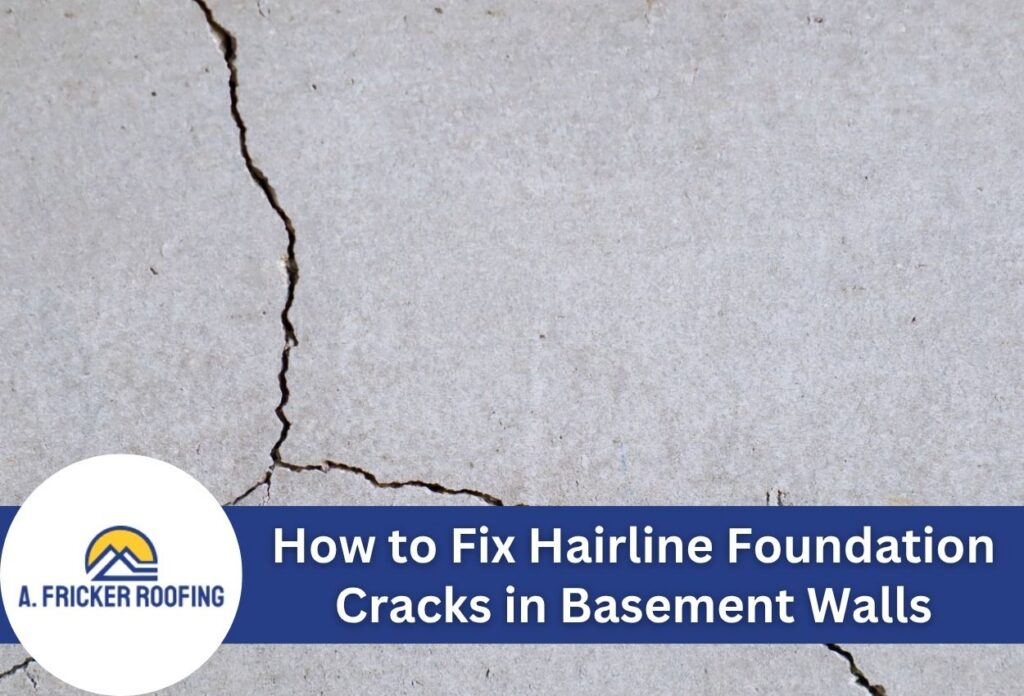

Hairline cracks measure less than 1/16 inch wide, roughly 1.6 millimeters or less, and are among the most common basement wall problems reported in homes with poured concrete or concrete block foundations. Most of these cracks form from normal concrete shrinkage as it cures or from minor settlement over time. On their own, they are not structurally dangerous.
That said, not every crack can be ignored. Cracks wider than ¼ inch, horizontal cracks running along block or poured walls, and any crack leaking beyond minor seepage all require a professional assessment. Those patterns can signal more serious pressure or structural movement.
In Tulsa, Northeast Oklahoma’s clay soils expand when wet and shrink when dry. Combined with heavy spring rains, this puts intense water pressure against basement walls.
Are Hairline Cracks in Basement Walls Dangerous or Just Cosmetic?
Whether a hairline crack is dangerous or cosmetic depends on its width, orientation, and whether it is leaking water. Cracks under 1/16 inch wide are typically the result of normal concrete shrinkage and carry low risk. If a crack is wider than ¼ inch or runs horizontally along a basement wall, it can indicate a structural concern that requires professional evaluation.
Heavy spring rain can saturate the soil around a basement and increase water pressure against the walls. Even a slow seep can leave mineral staining and, over time, promote moisture damage and mold if left untreated.
| Crack Type | Typical Cause | Risk Level | DIY-Repairable | Leaking Likely? |
|---|---|---|---|---|
| Vertical hairline (under 1/16 inch) | Concrete shrinkage during curing | Low | Yes | No; unless crack widens |
| Diagonal crack (1/16 to ¼ inch) | Minor settlement or soil movement | Moderate | Only if dry and stable; professional assessment recommended | Yes; possible moisture pathway |
| Horizontal or stair-step (any width) | Lateral soil or hydrostatic pressure | High | No | Yes; active leaks likely |
A leaking crack is a sign of water pressure, not just a cosmetic flaw. If the leak goes beyond minor seepage, such as pooling water, a wet wall area larger than 1 square foot, or a leak that returns after being repaired, get a professional assessment before attempting any repairs yourself. Minor, stable seepage in a crack under 1/16 inch can be addressed with a polyurethane foam injection.
Which Repair Material Is Best for Fixing Hairline Foundation Cracks in Basement Walls?
Epoxy injection is best for fixing dry hairline cracks that need structural adhesion, but polyurethane foam injection outperforms it anywhere active water is present. The right material depends on the width of the crack, moisture conditions, and whether the wall is subject to soil movement.
| Repair Material | Best Use Case | Material Capability (Crack Width) | Cures Active Leaks | Approx. Material Cost |
|---|---|---|---|---|
| Epoxy injection | Dry hairline cracks needing structural adhesion | 0.5 mm to 3 mm | No | $80 to $200 per crack |
| Polyurethane foam injection | Hairline cracks with active leaks | 0.5 mm to 6 mm | Yes | $40 to $120 per crack |
| Hydraulic cement | Localized wet areas with visible water flow | 3 mm to 6 mm | Yes | $10 to $30 per repair |
| Polyurethane crack sealant/caulk | Surface-level hairline cracks with minor seepage | 0.5 mm to 3 mm | No | $10 to $25 per repair |
These ranges show what each material can handle, not what is safe to DIY. For homeowner repairs, stay under 1/16 inch (about 1.6 millimeters). Cracks between 1/16 and ¼ inch should be assessed by a professional before any repair, and cracks wider than ¼ inch always need one.
For Tulsa-area homes sitting on expansive clay soils, rigid repair materials like hydraulic cement are more likely to crack again within 5 years because the soil shifts seasonally and the repair cannot flex with the wall. Flexible polyurethane sealants and foam injections accommodate that minor wall movement, making them the better long-term choice for most Northeast Oklahoma basements. Epoxy injection remains the gold standard for dry cracks where restoring structural strength is the priority.
How Do You Seal Hairline Cracks in Concrete Basement Walls as a DIY Project?
Most homeowners can seal dry hairline cracks under 1/16 inch wide for $10 to $200, using basic tools and either polyurethane caulk or an epoxy injection kit. Follow these steps in order:
- Gather tools and materials. You will need: a wire brush, polyurethane caulk or an epoxy injection kit, a caulk gun, safety glasses, and gloves (plus hydraulic cement, a cold chisel, and a hammer only if you are sealing a small, seeping crack). The total cost of materials typically runs $10 to $200 per repair, depending on the method.
- Clean the crack with a wire brush. Remove loose concrete, dust, and any white mineral deposits. A clean surface allows sealants to adhere properly.
- Let the wall dry for 24 to 48 hours minimum. Do not skip this step for epoxy or polyurethane caulk applications. Both products require a dry surface to adhere properly.
- Check for active water flow. If water is seeping through the crack, do not use epoxy. Attempting an epoxy injection on a wet, actively leaking crack will result in adhesion failure and wasted material. Switch to hydraulic cement or a polyurethane foam injection instead.
- Use hydraulic cement only for small, stable cracks with minor seepage. It is not recommended for dry hairline cracks. Follow the manufacturer’s instructions for chiseling and undercutting the crack, and call a professional if the crack is wider than a ¼ inch.
- Mix and apply your chosen material. Hydraulic cement sets in 3 to 5 minutes, so mix small batches and work fast. Press it firmly into the crack and hold it in place until it sets.
- Allow full cure time before finishing. Epoxy requires 24 to 72 hours to fully cure, hydraulic cement cures in 24 to 48 hours, and polyurethane caulk needs a full 24 hours to cure completely.
A DIY repair is only a long-term fix if the crack is dry, stable, and under 1/16-inch wide. Any wider, horizontal, or actively leaking crack needs a professional assessment before applying any sealant.
When Should You Call a Professional Instead of DIY-Repairing a Foundation Crack?
Some crack patterns signal active structural movement that sealants cannot fix and may make worse. Call an experienced, insured contractor when any one of the following conditions is present:
- Crack exceeds a ¼-inch width. At this width, the gap has moved beyond normal shrinkage. A structural assessment is recommended before any repair material is applied.
- Horizontal or stair-step cracking pattern. These patterns indicate lateral soil pressure or settlement, not cosmetic surface issues. No DIY product addresses the underlying cause.
- Wall curving or displacement greater than a ⅛ inch. Any visible wall movement of more than a ⅛ inch means the structure is actively shifting. This requires professional reinforcement, not sealant.
- Multiple cracks appearing within 12 months. New cracks forming repeatedly within 1 year point to ongoing soil movement or drainage failure beneath the foundation.
- Leaks pooling on the floor or a wet wall surface larger than 1 square foot. That volume of water means water pressure has already compromised the wall in a way surface sealants cannot correct.
- A crack located near a weight-bearing point such as a beam pocket or window corner. Cracks at structural stress points can indicate weight-related movement and should always be evaluated by a professional.
Oklahoma Permits and Older Tulsa Homes
Oklahoma does not issue a statewide general contractor license, but cities such as Tulsa have their own contractor registration and permit rules. Structural foundation repairs, including wall reinforcement, drainage system installation, or any excavation, may require a building permit depending on the municipality and extent of work.
Older homes often have weaker concrete walls, so a professional assessment is advisable for any crack showing signs of active movement, even if the crack appears narrow.
What Does a Professional Epoxy Injection Repair for a Hairline Foundation Crack Cost vs. DIY?
A professional epoxy injection for a single hairline foundation crack typically costs $500 to $1,500 per crack, while a complete DIY repair using polyurethane caulk or an epoxy kit runs just $10 to $200. The right choice depends on the type of crack, moisture conditions, and the long-term risks.
| Repair Method | Approximate Cost Range | Estimated Repair Lifespan |
|---|---|---|
| DIY polyurethane caulk/sealant | $10 to $25 | 3 to 7 years |
| DIY hydraulic cement repair | $10 to $30 | 2 to 5 years |
| DIY epoxy injection kit | $80 to $200 | 10 to 20 years (dry cracks only) |
| Professional epoxy injection (per crack) | $500 to $1,500 | 20 or more years |
| Professional polyurethane injection (per crack) | $400 to $1,200 | 10 to 20 years |
| Full professional waterproofing | $8,000 to $25,000 | 20 to 30 years |
The cost difference between DIY and professional repair is wide, but so is the cost of doing nothing. Untreated hairline cracks that develop into active leaks can significantly reduce a home’s resale value, and restoration costs climb fast once water reaches framing, insulation, or finished surfaces. A $10 to $200 DIY repair on a dry, stable hairline crack under 1/16 inches wide is one of the highest-return home maintenance interventions available. Once a crack is actively leaking or widening, that window closes, and professional costs take over.
When Is the Right Time to Fix Basement Foundation Cracks in the Tulsa Area?
The two best times for repairs in Northeast Oklahoma are late summer to early fall (August through October) and late winter to early spring (February through March). Choosing the right time can mean the difference between a repair that holds for years and one that fails within months. Tulsa’s soil is driest from August through October, which means cracks are at their widest and epoxy or polyurethane injection materials can fill the gap. The February through March window matters because it puts a sealed wall in place before Tulsa’s spring wet season (April through June), when elevated groundwater and saturated clay soils create the most water pressure against basement walls and the greatest risk of hairline cracks leaking.
One hard limit applies to any repair timing: Epoxy injections require a minimum surface temperature of 40 degrees Fahrenheit and completely dry conditions to cure correctly. In Tulsa, those conditions are reliably met from late April through October. From November through March, unexpected temperature drops can compromise cure quality, making repairs in February and March a narrow but workable window when a dry wall and above-freezing temperatures can be confirmed. Never attempt an epoxy injection on a wet wall or during active rainfall, regardless of the season. Polyurethane foam is the exception for cracks with minor seepage, but avoid working during heavy rain or when water is pooling against the wall outside.
Ready to Stop Basement Wall Cracks Before They Get Worse?
A dry, stable hairline crack is easy to manage when you catch it early. Left alone, it can open the door to moisture, especially once spring rain saturates Tulsa’s clay soils. Poor drainage, such as clogged downspouts, missing gutters, or soil that slopes toward the house, can add to the water pressure against your basement walls. A quick gutter and grading check is a smart first step before any sealant goes near the wall.
With 41 inches of annual rainfall and expansive clay soils putting extra stress on foundations every spring, now is the time to act. A. Fricker Roofing and Waterproofing serves Tulsa-area homeowners with residential waterproofing and gutter services designed to keep water moving away from your foundation. If your cracks are widening, leaking, or showing any of the warning signs above, our team can help you find the cause and fix it before it gets worse.
Not ready to schedule? Learn more about basement waterproofing.