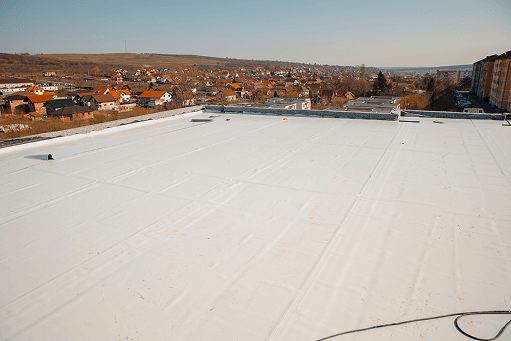

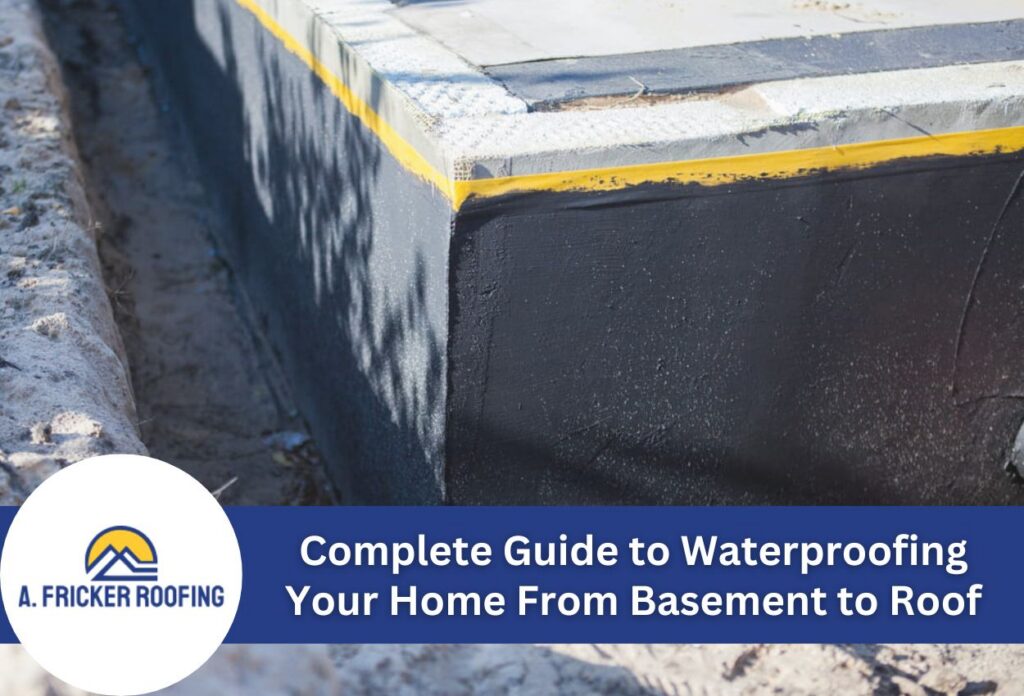

Tulsa gets 41 inches of rain every year, spread across 91 wet days, and that water has to go somewhere. When it finds a crack in your foundation, a gap in your exterior walls, or a weak spot under your roof, the damage starts fast. Home waterproofing is the layer of protection that keeps moisture out of your basement, foundation, exterior surfaces, and roofing system before it causes rot, mold, and structural failure.
This guide covers home waterproofing in Tulsa from start to finish. Tulsa’s spring storm season peaks in April and May, with roughly a 60% monthly chance of hail. Winters bring freezing temperatures and repeated temperature changes that open up cracks in concrete and masonry. That combination makes water intrusion one of the most common and most expensive problems local homeowners face.
Whether water is already getting in or a homeowner wants to protect their property before Tulsa’s rainy season hits, this article walks through how to spot the warning signs, which materials hold up best in Oklahoma’s climate, and when to call a professional. Below, readers will find sections covering basement walls, foundation cracks, exterior surfaces, and roofing systems, everything needed to make a smart waterproofing decision.
*Please note, price ranges listed in this article may not reflect the final cost of your project. Prices are subject to change based on various factors such as local labor rates, material quality, and more. All costs established in this article are rough estimates based on average industry rates.
What Are the Warning Signs Your House Needs Waterproofing Before the Rainy Season?
Spotting the signs your house needs waterproofing before the rainy season can save thousands of dollars in structural repairs, and in Tulsa, the window to act is narrow. April and May bring roughly a 60% monthly chance of hail, and water damage that starts small in winter can turn into a serious problem by peak storm season.
Interior Warning Signs
- Efflorescence on basement walls: White, chalky mineral deposits on concrete or block walls mean water is moving through the wall and leaving minerals behind. This is one of the earliest visible signs of leaks.
- Musty odors in lower levels: A persistent damp or mildew smell, even without visible moisture points to trapped water vapor or hidden mold growing behind walls or under flooring.
- Peeling paint or bubbling drywall: Paint that peels, bubbles, or flakes on basement walls signals moisture pushing through from the outside. This often follows a heavy rainstorm or rapid temperature change.
- Visible mold or dark staining: Mold can appear within 24 to 48 hours of sustained moisture exposure. Black, green, or gray patches near floor joints or wall seams need immediate attention.
- Wet floors after rain: Standing water or consistently damp concrete floors during or after storms indicate failed drainage or a compromised foundation slab.
- Water stains at the base of walls: Rust-colored or gray tide marks at floor level show repeated water intrusion, even if the floor feels dry at the time of inspection.
Exterior Warning Signs
- Cracks in the foundation: Tulsa’s repeated temperature changes throughout winter expand and contract concrete, widening hairline cracks into water entry points. Horizontal cracks are especially serious and need professional evaluation fast.
- Deteriorating caulk around windows and doors: Caulk that is cracked, missing, or pulling away from the frame leaves gaps where wind-driven rain and hail can push water directly into wall cavities.
- Damaged or missing flashing: Flashing along rooflines, chimneys, and wall joints seals the transition between surfaces. When it lifts or corrodes, water channels straight into the structure below.
- Negative grading around the home: Soil or landscaping that slopes toward the foundation rather than away from it directs runoff from Tulsa’s 41 inches of annual rainfall directly against the base of the home.
- Staining or efflorescence on exterior masonry: The same white mineral deposits that appear indoors can show up on exterior brick or block, signaling water movement through the wall from the outside in.
- Spalling or crumbling masonry: Flaking or pitting on brick and concrete surfaces is caused by water freezing inside pores and cracking the material from within, a direct result of Tulsa’s winter temperature swings.
Conduct a full visual inspection of both the interior and exterior in late February or early March before Tulsa’s peak storm season begins in May, so any repairs can be scheduled during the early spring window when temperatures are moderate, and conditions are dry enough for proper waterproofing work.
The more warning signs present at once, the more urgent the situation. Catching even one or two of these indicators before April storms arrive can be the difference between a manageable repair and a major water damage claim.
How Does Water Actually Get Into a Home? Understanding the Entry Points
Water enters homes through four main pathways: hydrostatic pressure through basement walls and floors, capillary action through porous concrete and masonry, surface water intrusion through cracks and gaps in the exterior, and roof-level gaps through damaged shingles, flashing, or failed underlayment. Each pathway works differently, and most water damage involves more than one at the same time.
Hydrostatic pressure is the force that saturated soil pushes against a foundation wall. Tulsa’s clay-heavy soils absorb water slowly and hold it for a long time after a rainstorm, far longer than sandy or loamy soils would. That trapped moisture builds pressure directly against the basement walls and floors. Many homeowners see water on their basement floor and assume a surface crack is to blame, when the actual force driving water inward is the soil pressing from the outside. This distinction matters because the wrong diagnosis leads to the wrong repair.
Capillary action works differently. Concrete and masonry are porous materials. Water does not need a visible crack to move through them it wicks upward and inward at a microscopic level, much like a paper towel absorbs liquid. This is why basement walls can feel damp or show efflorescence even when no obvious crack or gap is present. Surface water intrusion adds a third layer: any gap in caulking, deteriorating mortar, or damaged siding gives wind-driven rain a direct opening into wall cavities.
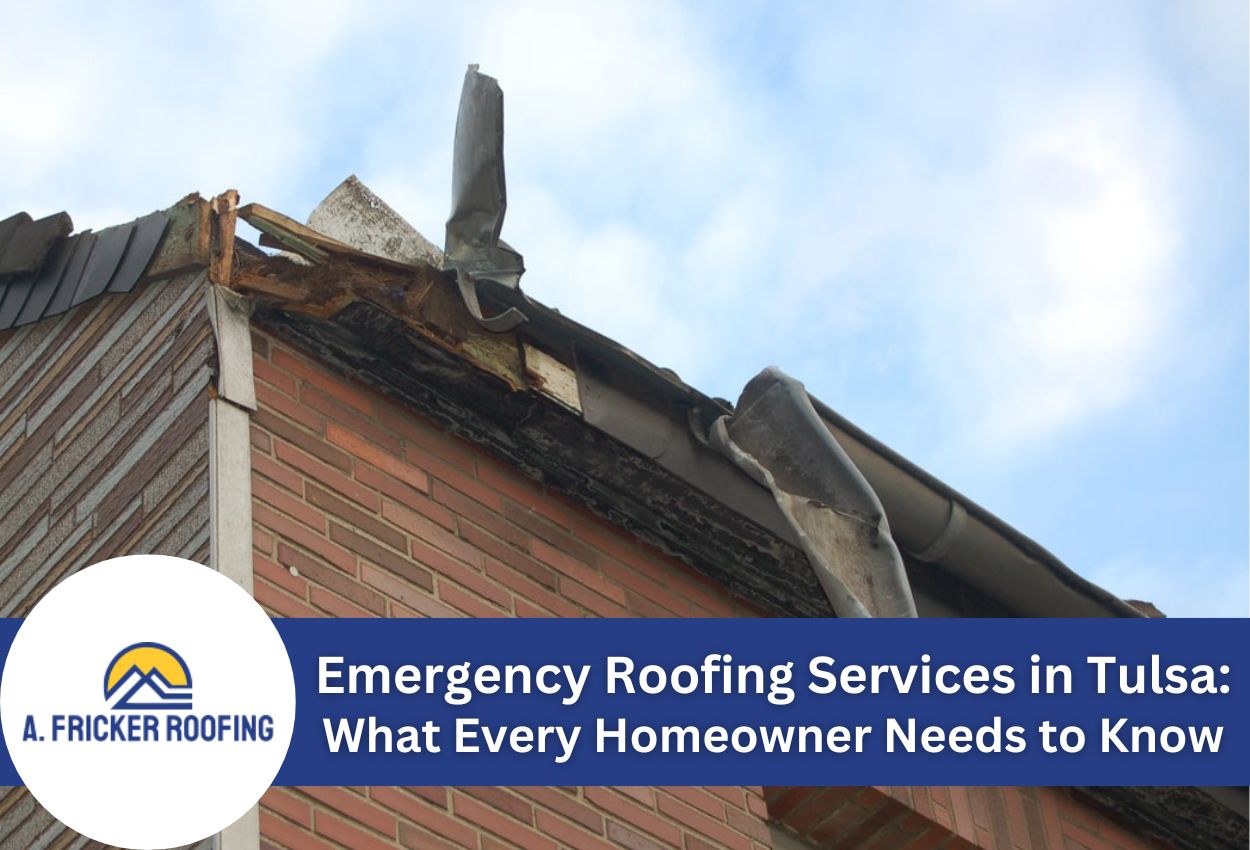
At the roof level, missing or cracked shingles, lifted flashing, and worn underlayment allow water to bypass the exterior and travel deep into the structure before it ever shows up inside a room. Tulsa gets 41 inches of rain annually across 91 wet days, which means the roofing system absorbs constant stress throughout the year.
All of these entry points, the connected system of roofing, walls, windows, foundation, and drainage, must work together to keep water out. A failure in any one part puts pressure on everything else. The sections that follow cover each of those systems in detail.
What Are the Best Waterproofing Methods for Basement Walls and Floors?
The best waterproofing methods for basement walls and floors depend on where water is entering, how much pressure is involved, and whether the problem is active or preventive, and in Tulsa, the right choice can also depend on the time of year. The table below compares six methods side by side so homeowners can match the right solution to their specific situation.
| Method | Best Use Case | DIY Feasibility | Average Cost Range | Durability |
|---|---|---|---|---|
| Interior Drainage System (French Drain) | Chronic water pooling on the basement floor. Hydrostatic pressure from clay-heavy soil | No | $3,000 to $8,000 | 20 to 30 years with maintenance |
| Interior Sealants and Coatings | Minor seepage through porous concrete. Low hydrostatic pressure situations | Yes | $100 to $600 | 3 to 5 years |
| Exterior Waterproofing Membrane | Severe water intrusion. New construction or full foundation repair | No | $8,000 to $15,000 | 25 to 40 years |
| Crack Injection (Epoxy or Polyurethane) | Isolated foundation cracks, active leaks, or structural hairline fractures | Partial | $300 to $1,200 per crack | 10 to 20 years |
| Sump Pump Installation | Basements with repeated flooding. Complements interior drainage systems | No | $800 to $2,500 | 7 to 10 years (pump unit) |
| Vapor Barrier (Floor) | Ground moisture and humidity control. Protects finished basement floors | Partial | $500 to $2,000 | 10 to 20 years |
Interior Drainage Systems, Exterior Membranes & Crack Injection: Which Is Right for Tulsa Homes?
Interior drainage systems, often called French drains, work by collecting water that has already passed through the foundation wall and channeling it to a sump pump before it floods the floor. For Tulsa homes built on clay-heavy soil, where hydrostatic pressure builds quickly after heavy rain, an interior drainage system paired with a sump pump is one of the most reliable combinations available. It does not stop water from entering the wall, but it controls water once it gets in, protecting the floor and keeping the basement dry even during Tulsa’s wet springs.
Exterior waterproofing membranes are the most effective long-term solution for stopping water before it ever reaches the foundation wall. The membrane is applied directly to the outside of the foundation after excavation, meaning the entire perimeter of the home must be dug out to expose the foundation. That is a large project, and ground conditions matter. In Tulsa, exterior membrane work is best scheduled during the early spring window of March through April or the early fall window of September through October, when temperatures run 50 to 75 degrees Fahrenheit, and the soil is workable without being waterlogged from peak storm season. A membrane installed correctly during these windows can last 25 to 40 years, far longer than any interior coating or sealant.
Crack injection is the most targeted method of the three. Epoxy injections bond tightly to concrete and work well for structural cracks that are dry or slow-seeping. Polyurethane foam injections expand on contact with moisture, making them better for active leaks. In Tulsa, repeated temperature changes throughout winter open and flex foundation cracks over time, which is why interior sealants and coatings with a durability range of only 3 to 5 years often fail faster here than in more stable climates. Crack injection addresses the specific failure point directly and holds up far longer than a surface-applied coating alone.
How Do You Waterproof Foundation Cracks Yourself? A Step-by-Step Guide
Polyurethane foam injection is the most accessible DIY method for waterproofing foundation cracks. It expands on contact with moisture, seals active leaks, and costs far less than professional crack injection at $300 to $1,200 per crack. Not every crack qualifies for DIY treatment, though. The first step in any step-by-step guide to waterproofing foundation cracks yourself is identifying what type of crack you are dealing with before touching a tool.
| Crack Type | Likely Cause | Urgency Level | DIY Appropriate? |
|---|---|---|---|
| Hairline (thin, surface-level) | Normal concrete curing and settling | Low | Yes |
| Vertical | Hydrostatic pressure from saturated soil | Moderate | Yes, with care |
| Diagonal | Differential settling of the foundation | Moderate to high | Partial monitor closely |
| Horizontal | Severe lateral soil pressure against the wall | High structural risk | No call a professional |
Horizontal cracks in basement walls signal structural compromise they should never be DIY-treated. If a horizontal crack is present, stop and contact a licensed foundation or waterproofing contractor immediately. This is not a sealant situation. It is a structural one.
For hairline, vertical, and diagonal cracks that are stable and not actively widening, here is the full DIY process using polyurethane foam injection:
- Identify and classify the crack. Measure the width and note the direction: vertical, diagonal, or horizontal. Mark the ends with a pencil so you can tell if it grows over the next few days. Do not proceed if the crack is horizontal or actively spreading.
- Clean the crack. Use a wire brush to scrub out loose concrete, dirt, and debris along the full length of the crack. Follow with a vacuum to clear all dust. A clean surface lets the injection material bond properly to the concrete.
- Drill injection ports at 6-inch intervals. Use a hammer drill with a 5/8-inch bit to drill holes along the crack at a 45-degree angle, spaced 6 inches apart. These ports are the entry points for the foam.
- Insert and secure the injection port fittings. Tap plastic injection port fittings into each drilled hole. Apply hydraulic cement or epoxy paste over the surface of the crack between ports to seal the face of the wall and force the foam to travel inward rather than out.
- Inject polyurethane foam from the lowest port upward. Attach the foam injection gun to the lowest port and inject until foam begins to appear at the next port up. Move up the crack, port by port, until the entire crack is filled. Polyurethane foam expands on contact with moisture inside the crack, which makes it well-suited for active or damp cracks.
- Cap the ports and allow to cure. Snap the port caps closed and let the foam cure fully. Most polyurethane products cure within 24 to 48 hours, depending on temperature and moisture level.
- Apply a masonry waterproofing coating as a secondary barrier. Once cured, brush or roll a hydraulic cement or masonry waterproofing coating over the entire repaired area. This secondary layer adds protection against surface seepage and extends the life of the injection repair.
DIY crack injection works best on isolated, stable cracks. If a crack returns within one season, or if multiple cracks appear in a short period, that pattern points to a larger drainage or pressure problem that surface repair alone will not fix. A licensed waterproofing contractor can assess whether a more complete solution, like an interior drainage system or exterior membrane, is needed.
What Are the Most Effective Methods for Waterproofing a Home’s Exterior?
Gutters, downspouts, and grading corrections deliver the highest return on investment of any exterior waterproofing measure, and both are within reach for budget-conscious homeowners without hiring a contractor. Five methods cover most exterior water intrusion problems, ranging from free DIY fixes to professional coating applications. Each one targets a different point in the water’s path toward your foundation.
| Method | Primary Function | DIY Option? | Approximate Cost Range |
|---|---|---|---|
| Gutter & Downspout Maintenance + Extension | Drainage management directs water 6+ feet from the foundation | Yes | $10 to $50 for extensions; $150 to $500 for professional cleaning |
| Grading and Drainage Correction | Drainage management slopes ground away from the foundation | Yes | $100 to $500 DIY. $500 to $3,000 professional |
| Window & Door Caulking and Flashing Repairs | Gap sealing blocks water entry at gaps | Yes | $20 to $150 in materials |
| Elastomeric Exterior Wall Coatings | Surface barrier flexible membrane over walls | Partial | $500 to $3,000, depending on coverage area |
| Waterproof House Wrap / Weather-Resistive Barrier | Surface barrier installed behind siding during construction or re-siding | No (part of re-siding project) | Included in re-siding costs. $1,000 to $4,000+ for the wrap portion |
Start with gutters and grading before spending money on coatings or barriers. Downspout extensions should discharge water at least 6 feet from the foundation, a fix that costs as little as $10 to $50 per downspout. Grading corrections simply require sloping soil away from the home at roughly 6 inches of drop over the first 10 feet. Neither requires special tools or a contractor. Professional gutter installation and maintenance services are also available for homeowners who prefer expert help managing drainage around their foundation.
Window and door caulking deserves more attention in Tulsa than in cooler climates. Tulsa’s intense summer UV exposure and heat aging break down exterior caulk faster than in northern states. Annual inspection and reapplication of exterior caulk around windows, doors, and flashing is a local best practice, a $20 to $150 fix that prevents water from reaching wall cavities and framing.
Elastomeric coatings provide a flexible surface barrier that stretches and contracts with temperature changes, making them a solid upgrade for masonry and stucco walls. Waterproof house wraps or weather-resistive barriers are the most thorough surface protection available, but they only make sense during a re-siding project since they install behind the cladding. If a full re-side is already planned, adding a quality weather-resistive barrier at that stage adds relatively little to the overall cost while providing protection that can last decades.
How Does Your Roof Factor Into Your Home’s Complete Waterproofing System?
The roof is the first line of defense in any whole-home waterproofing strategy, and when it fails, water bypasses every protective measure below it. A cracked foundation coating, a sealed basement wall, or a properly graded yard still loses the battle if water is entering through damaged shingles or failed flashing. No lower-level waterproofing method can fully compensate for a compromised roof overhead.
Tulsa homeowners face several specific roofing vulnerabilities that lead directly to water intrusion. April and May bring the highest hail risk in the area, with monthly chances of hail around 60%. Hailstones create micro-fractures in shingles that are often invisible to the naked eye but allow moisture to seep through over time. Flashing failures around chimneys, vents, and skylights are another common entry point gaps as small as a few millimeters can funnel gallons of water into wall cavities and attic spaces during a single Tulsa thunderstorm. During winter, temperature changes cause roofing materials to expand and contract repeatedly, which can force ice and meltwater under shingles and into the roof deck. Then summer arrives with July highs averaging 93 degrees Fahrenheit, and UV radiation accelerates shingle degradation, causing granule loss and brittleness that shortens roof life and opens new pathways for moisture.
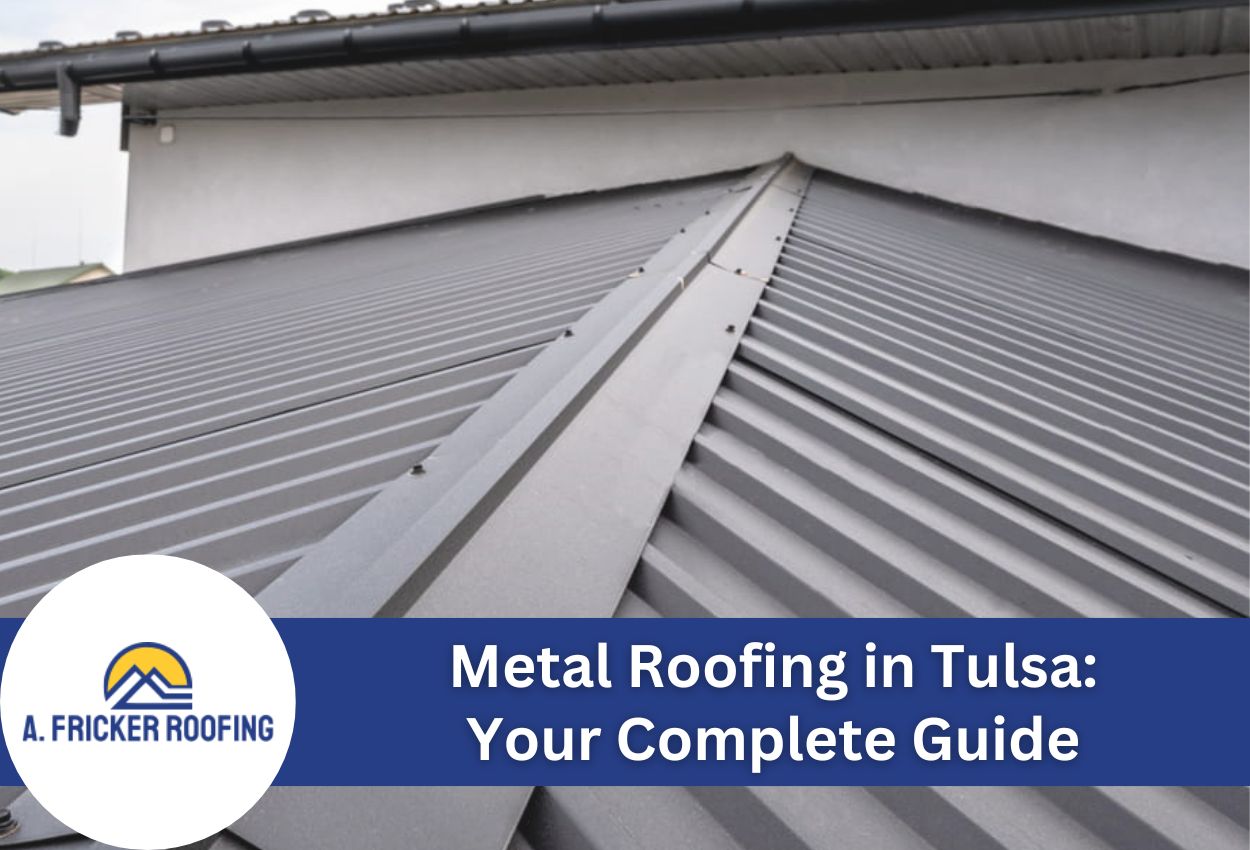
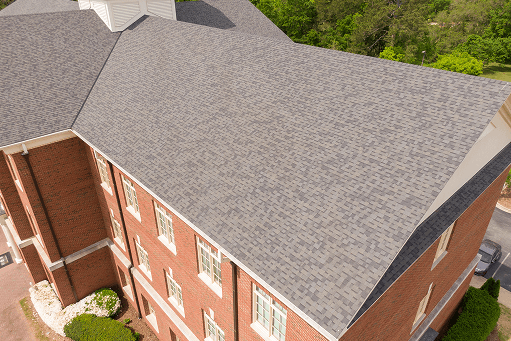
Roofing contractors in Tulsa recommend Class 4 impact-resistant architectural shingles with proper underlayment and sealed flashing as the most effective roofing upgrade for a whole-home waterproofing system. Class 4 shingles with at least a 110 mph wind rating reduce hail damage risk and hold up better under Tulsa’s severe weather conditions. Metal roofing and synthetic slate roofing are also worth considering; both offer superior moisture resistance, longer service life, and better performance during temperature swings than standard 3-tab shingles.
After any significant storm, a post-hail roof inspection can catch micro-fractures and flashing damage before they become interior water problems. Knowing which roofing materials perform best under Oklahoma’s weather patterns is just as important as the inspection itself, two topics that go well beyond what a single section can cover but make a real difference in long-term waterproofing outcomes for Tulsa homes.
DIY Interior Waterproofing vs. Hiring a Professional Contractor: Which Is Right for You?
DIY interior waterproofing works well for small, isolated issues, but hiring a professional contractor is the right call when hydrostatic pressure, mold, or structural damage is involved. Knowing which situation you’re in before spending money or time is the most valuable decision you can make.
Choose DIY If…
- The crack is small and stable. Surface cracks under 1/8 inch wide that have not grown over a 72-hour monitoring period are reasonable candidates for DIY injection or sealant repair.
- The moisture is surface-level condensation. If water beads on the wall surface rather than seeping through it, improving ventilation or applying a masonry waterproofing coating may resolve the issue without professional help.
- The problem is isolated to one small area. A single hairline crack or a narrow gap around a pipe can often be handled with hydraulic cement or a waterproofing coating available at most hardware stores for $20 to $150 in materials.
- Your budget is tight right now. Downspout extensions, grading corrections, and caulk repairs cost as little as $10 to $50 per fix and address the majority of surface-level water entry points before a larger solution becomes necessary.
- You have basic tools and a full day available. DIY crack injection requires a hammer drill, injection port fittings, and polyurethane foam materials that most homeowners can assemble without specialized training.
Hire a Professional If…
- Cracks are horizontal, diagonal, or actively spreading. Horizontal cracks in particular signal wall movement or structural stress that surface repair will not fix and that can get worse without a proper drainage solution.
- Mold is present or suspected. Visible mold growth or a persistent musty smell point to moisture that has been entering for weeks or months, which typically requires professional remediation alongside waterproofing work.
- Multiple cracks appear in a short period. A pattern of new cracks forming over one season is a strong indicator of systemic hydrostatic pressure, a common condition in Tulsa’s clay-heavy soil environment, where water has limited places to drain after heavy rainfall.
- Water returns after a previous DIY repair. If a patched crack reopens within one season, the root cause has not been addressed. An interior drainage system or exterior membrane is likely needed.
- The affected area covers more than a few square feet. Widespread seepage across a wall or floor slab requires professional-grade interior drainage systems that far outperform sealant applications when sustained pressure is the cause.
- You are preparing the home for sale. Buyers and inspectors look closely at basement moisture history. A documented professional repair with a written warranty carries far more weight than a DIY patch.
When hiring a waterproofing contractor in Tulsa, verify current licensing and insurance before signing anything. Ask for a written warranty of at least 10 years on interior drainage systems, references from local projects, and a free moisture assessment before any quote is given. Even confident DIYers should get at least one professional quote for any basement water intrusion issue. Professional-grade interior drainage systems consistently outperform DIY sealant applications when hydrostatic pressure is the root cause, and in Tulsa’s clay-soil environment, that condition is more common than most homeowners expect.
How Much Does Home Waterproofing Cost and What Affects the Price?
Professional basement waterproofing in Tulsa ranges from under $100 for a DIY crack kit to $15,000 or more for full exterior excavation, and the right solution depends entirely on where the water is coming from and how severe the intrusion is.
| Scale | DIY Cost Range | Professional Cost Range | Best For |
|---|---|---|---|
| DIY crack injection kit | $50 to $150 | N/A | Small, stable hairline cracks under 1/8 inch wide |
| Interior sealant or coating application | $20 to $200 | $500 to $1,500 | Surface-level moisture or condensation on masonry walls |
| Professional crack injection | N/A | $400 to $800 per crack | Active leaks, recurring cracks, or cracks wider than 1/8 inch |
| Sump pump installation (no battery backup) | $200 to $500 (unit only) | $800 to $2,000 | Homes with recurring water pooling on the basement floor |
| Sump pump installation (with battery backup) | $300 to $700 (unit only) | $1,200 to $3,000 | Homes in low-lying areas or those with frequent power outages during storms |
| Interior drainage system (full perimeter) | Not recommended as DIY | $4,000 to $12,000 | Hydrostatic pressure, widespread seepage, and clay-soil drainage problems |
| Exterior waterproofing with excavation | Not feasible as DIY | $8,000 to $15,000+ | Severe or long-term water intrusion at the foundation wall |
| Full basement waterproofing system | Not feasible as DIY | $10,000 to $20,000+ | Homes with multiple failure points, mold history, or structural damage |
Several factors push costs up or down in the Tulsa market. Basement square footage directly affects labor and material quantities. Tulsa’s clay-heavy soils hold water rather than draining it, which often means more drainage management is required than in sandier regions, raising the cost of interior drainage and exterior systems. Labor rates vary by contractor experience and current demand, and some projects may require permits through Tulsa or Tulsa County building offices, adding both cost and timeline to the job.
The cost-versus-risk calculation matters here. Untreated water intrusion in Tulsa homes can lead to mold remediation costs of $1,500 to $10,000 or more, plus structural repairs and lower property values. Professional waterproofing is a protective investment, not an optional upgrade, especially in a market where clay soils and heavy spring rainfall create conditions that accelerate foundation water damage. Before starting any repairs, Tulsa homeowners should also review their homeowners’ insurance policy. Some plans cover water damage caused by sudden storms but exclude gradual seepage, and knowing that distinction before signing a contractor agreement can affect how repairs are funded. Homeowners navigating storm-related damage can also explore the insurance claim assistance process to understand what coverage may be available for water intrusion repairs.
When Is the Best Time of Year to Waterproof Your Home in Tulsa, Oklahoma?
Early spring, March through early April, is the best window for exterior waterproofing work in Tulsa. Temperatures are moderate, the ground is no longer frozen, and the peak storm season hasn’t started yet. Scheduling a professional roof and foundation inspection in February or early March is the single most time-leveraged action a Tulsa homeowner can take before the rainy season hits.
| Season / Window | Temperature Range | Recommended Waterproofing Tasks | Tasks to Avoid |
|---|---|---|---|
| Early Spring (March to early April) | 40 degrees to 65 degrees Fahrenheit | Exterior foundation coatings, crack injection, drainage corrections, gutter repairs | Delaying inspection past early April, contractor slots fill fast before storm season |
| Summer (June to August) | 85 degrees to 95 degrees+ | Interior sealants, early morning exterior caulking, sump pump checks | Full exterior coating applications in the afternoon heat, high temperatures affect curing |
| Early Fall (September to October) | 50 degrees to 75 degrees | Exterior caulking, shingle sealing, drainage corrections, downspout extensions | Postponing repairs into November, the ground starts hardening, and contractor availability drops |
| Winter (November to February) | 20 degrees to 45 degrees | Interior sealants, sump pump installation, and basement drainage planning | Exterior foundation excavation, coating applications, exterior crack injection |
Any exterior waterproofing work in summer should be scheduled during early morning hours. Afternoon temperatures regularly exceed 90 degrees in Tulsa, which can affect how coatings cure and make working conditions unsafe.
Homeowners who wait until May or June to start exterior waterproofing often run into two problems at once: contractor backlogs during peak storm season and the real risk of a severe storm arriving before repairs are finished. Tulsa’s hail risk peaks in April and May, with monthly chances around 60%. That window closes fast. Booking an inspection in February or early March keeps repair work ahead of the storms, not behind them.
How Long Does Home Waterproofing Last and How Do You Maintain It?
Lifespan varies widely by method. Interior sealants last just 3 to 7 years, while a properly installed interior drainage system with a sump pump can perform for 25+ years with basic upkeep. What you invest in determines how long you go between repairs. Understanding those ranges helps homeowners plan budgets and avoid being caught off guard when a solution stops performing.
Lifespan by Waterproofing Method
Polyurethane crack injections hold up for 10 to 20 years when the crack is stable and properly prepared before injection. Exterior waterproofing membranes and elastomeric exterior coatings fall in the 10 to 20-year and 10 to 15-year ranges, respectively. The longest-lasting option by far is a full interior drainage system with a sump pump, 25+ years, making it the most cost-effective choice for homes with chronic hydrostatic pressure problems. Architectural shingles with proper underlayment protect against roof-sourced leaks for 25 to 50 years, depending on material and how well the roof is maintained over time.
Annual Maintenance Checklist
Most waterproofing failures don’t happen overnight they develop because small problems go unchecked for too long. Inspect gutters and downspouts every fall and spring, clearing debris that forces water to back up against the roofline or foundation. After heavy rain, walk the foundation perimeter and check that the ground slopes away from the home. Exterior caulk should be reapplied on a 3 to 5 year cycle since UV exposure and temperature changes break down the seal faster than most homeowners expect. Test sump pump operation quarterly. A pump that sits idle for months can seize when you need it most. Schedule a professional roof inspection annually and after any severe hail or wind storm.
Tulsa’s combination of high humidity, intense UV exposure, temperature changes, and frequent severe storms shortens the effective lifespan of exterior coatings and sealants compared to national averages. That makes shorter inspection intervals a local best practice, not an overreaction.
What Products and Materials Should You Use for DIY Home Waterproofing?
The right product depends entirely on where the water is entering. Interior sealers handle surface moisture, while crack injection kits address structural gaps, and exterior coatings stop water before it ever reaches the wall. Buying the wrong product for the job wastes money and leaves the problem unsolved. Organizing by category makes product selection much easier.
- Interior concrete sealers and coatings: Epoxy sealers absorb into the concrete and block moisture at the pore level. Crystalline waterproofing products chemically bond with the concrete matrix and can stop seepage in walls holding active moisture. Hydraulic cement sets in 3 to 5 minutes, making it the right pick for plugging active drips before applying a topcoat. Look for products rated for below-grade applications and NSF/ANSI compliance if the treated area is near a potable water source.
- Crack repair products: Polyurethane injection kits flex after curing, making them a better option for cracks in walls that experience minor movement. Epoxy injection kits cure rigidly and work best for stable, dry cracks under 1/8 inch wide, the same threshold where DIY repair is appropriate. Hydraulic cement handles active leaks that are still seeping at the time of repair. Match the product to the crack activity level, not just crack size.
- Exterior products: Elastomeric masonry coatings stretch and recover, which helps them hold up through temperature changes without cracking. Choose UV-stable products for any exterior surface. Tulsa’s summer sun degrades standard coatings faster than most product labels assume. Waterproof caulks rated for masonry and concrete should be rated for temperature flexibility down to at least 0 degrees Fahrenheit. Self-adhering waterproofing membranes work well on below-grade foundation walls before backfilling.
- Drainage aids: Downspout extenders costing $5 to $20 each redirect water at least 4 feet from the foundation, one of the lowest-cost fixes available. Corrugated perforated drain pipe forms the core of a French drain system. Layer gravel and landscape fabric in the trench to keep soil from clogging the pipe over time.
Buying waterproofing materials in late fall or winter typically yields lower costs and better contractor availability in the Tulsa market compared to the spring rush period, the same window when interior work, like sump pump installation, is already on the recommended task list. Stock up on sealers, caulks, and injection kits before February, and the materials will be ready when the ideal early spring repair window opens.
How Does Waterproofing Increase Your Home’s Value and Protect Your Investment?
A professionally waterproofed basement can return 30% to 50% of its cost in increased home resale value, making it one of the few home improvements that pays back at the point of sale, not just during the years you live there. That return comes from a simple reality: buyers treat moisture problems as deal-breakers. Water intrusion consistently ranks among the top five issues that kill home sales during inspection, and documented waterproofing work removes that obstacle before it ever comes up.
Tulsa’s real estate market adds another layer to this. Buyers in severe-weather markets increasingly ask for proof of waterproofing, roof condition, and the foundation’s structural integrity before closing. Homes with documented waterproofing work permits pulled, contractor records on file, and products installed hold a measurable competitive edge over comparable listings that have no paper trail on moisture management. That documentation signals to buyers and their inspectors that the home has been maintained against the exact risks Oklahoma weather creates.
There is also an insurance angle that many Tulsa homeowners overlook. Homes with a history of water intrusion may face higher homeowners’ insurance premiums in Oklahoma, or in some cases, coverage denial for water-related claims. Addressing moisture problems before they cause documented damage keeps that risk off the table. Spending money on waterproofing now costs far less than higher annual premiums or an out-of-pocket repair bill that an insurer declines to cover because the damage developed gradually over time.
Ready to Waterproof Your Tulsa Home? Here’s How to Get Started Today
With Tulsa’s hail risk peaking in April and May and monthly storm chances around 60%, the March and April window is the best time to get ahead of repairs before contractor schedules fill up. Don’t wait until the storm season arrives to find out availability is gone.
A. Fricker Roofing and Waterproofing serves Tulsa homeowners dealing with water intrusion, roof damage, and foundation moisture. A free inspection now costs nothing, a missed storm season can cost far more.
Schedule your free roof inspection.
Not ready to schedule? Learn more about emergency waterproofing services.