Safety Precautions for Tulsa Homeowners Before Beginning Basement Waterproofing
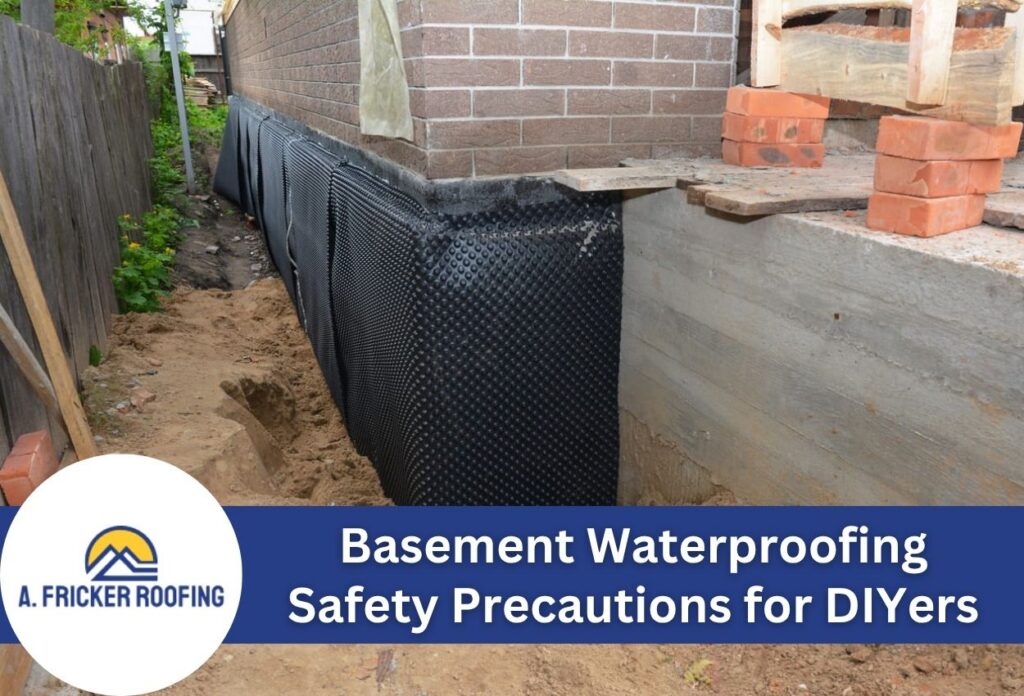

Basement waterproofing safety precautions start with understanding that Tulsa’s 41 inches of annual rainfall and high summer humidity levels make leaks a fast-moving problem, pushing many homeowners to start work before they are properly prepared. That urgency increases risks. Rushing a waterproofing job without the right safety steps can lead to serious injury, even on what looks like a simple project.
Understanding the primary hazards is the first step in staying safe. In enclosed basement spaces, chemical fumes from sealants and coatings can build up quickly, and in some cases the products used can actually displace breathable oxygen in the air. Waterproofing sealants themselves pose a direct risk too, causing skin and eye damage on contact. Once surface preparation is underway, wet concrete floors can turn into slip-and-fall hazards with almost no warning.
What Safety Gear Is Actually Required for Basement Waterproofing?
Five safety gear items are required for basement waterproofing. Substituting cheaper alternatives, like swapping a dust mask for a respirator, puts you at serious risk of chemical exposure or lung damage.
| Item | Protection | Minimum Specification | Estimated Cost Range |
|---|---|---|---|
| Half-Face Respirator | Fume and particulate inhalation | OV/P100 organic vapor cartridges; a dust mask is insufficient and must never be substituted | $40 to $70 |
| Chemical-Resistant Gloves | Skin contact with solvents | 15-mil minimum nitrile or neoprene; required when using products containing xylene or toluene-based solvents | $3 to $10 |
| Safety Goggles | Splash and chemical eye exposure | Indirect-vent goggles that meet the industry safety standard for eye protection | $8 to $20 |
| Coveralls | Full-body skin protection | Disposable or reusable chemical-resistant fabric | $5 to $25 |
| Rubber Boots | Slip resistance and foot chemical exposure | Steel-toe or chemical-resistant rubber, non-slip sole | $30 to $100 |
Glove thickness matters more than most homeowners expect. A thin disposable glove will quickly dissolve or allow skin absorption of xylene and toluene, solvents commonly found in sealants, leading to severe skin irritation or toxicity. This makes the 15-mil minimum thickness non-negotiable for skin protection, while your respirator handles the distinct inhalation hazards. Using a half-face respirator with OV/P100 cartridges is essential, as enclosed basements cause fumes to build up quickly, and open windows alone cannot provide adequate protection.
How Much Ventilation Do You Need to Safely Waterproof a Basement Yourself?
Industry ventilation guidelines recommend a minimum of 20 air changes per hour in confined spaces where solvent-based coatings are in use. A typical unventilated basement cannot come close to meeting this standard on its own, often achieving fewer than two air changes per hour naturally. That gap is not a minor shortfall. It means that fumes from epoxy or polyurethane coatings can build to dangerous levels within minutes of application.
Equipment That Actually Meets the Standard
A minimum 1,500 cubic feet per minute box fan positioned to exhaust air out of a window is the baseline setup. Pair it with a second fan at ground level supplying fresh air from outside. This two-fan approach creates a cross-flow pattern that moves contaminated air out while pulling clean air in. Industrial fans capable of 1,500 cubic feet per minute or higher can be rented at most equipment rental locations in the Tulsa area.
How Oklahoma’s Summer Changes the Risk
When outdoor temperatures exceed 90 degrees Fahrenheit, a common condition across Northeast Oklahoma from June through August, solvent evaporation rates increase faster than in cooler climates. Higher heat means VOC concentrations inside the basement rise faster, so the same coating that might allow a 30-minute working window in spring can become unsafe in under 15 minutes on a hot summer afternoon. Schedule application in the morning before peak heat sets in. Starting before 9 AM gives the best chance of keeping both temperature and VOC levels manageable throughout the job.
Proper ventilation equipment is not optional, so rent what is needed, set it up before opening any container, and never rely on a single open window to do the job.
What Fumes and Health Risks Come With Basement Waterproofing Products?
Solvent-based products, such as polyurethane sealants and epoxy injection systems, pose the highest risk of fumes in basement waterproofing, while hydraulic cement carries a long-term danger of silica dust inhalation that many homeowners overlook entirely.
- Hydraulic cement: A common patching and sealing material, hydraulic cement contains fine silica dust. Repeatedly breathing it in without a proper respirator can scar your lung tissue over time. No amount is fully safe to breathe, which is why the Occupational Safety and Health Administration (OSHA) limits exposure to 0.05 milligrams per cubic meter of air over an 8-hour workday.
- Acrylic masonry coatings: These are water-based, but that doesn’t mean they’re risk-free. These products release ammonia and low-level VOCs during application. Symptoms like eye irritation and headaches can appear within 1 to 2 hours of overexposure in a poorly ventilated space. You still need to use chemical-resistant gloves and indirect-vent goggles.
- Polyurethane sealants: These sealants contain xylene and toluene-based solvents. Dizziness, nausea, and disorientation can develop within 30 to 60 minutes of use when working in an enclosed basement without proper ventilation.
- Epoxy injection systems: While mixing and curing, these release vapors from amine-based hardening agents. Unprotected skin exposure or fume inhalation can trigger respiratory irritation and skin sensitization in as little as 15 to 30 minutes.
Tulsa’s high summer humidity can extend drying and off-gassing time for water-based acrylic coatings, meaning total fume exposure duration stretches beyond what the product label suggests. Basement waterproofing fumes and health risks increase the longer that air exchange is delayed, making ventilation setup non-negotiable before opening any container.
When to Stop Work: A Basement Safety Decision Framework
Stop work immediately if any one of the following six conditions is present. Continuing under these circumstances creates a serious risk of injury, product failure, or both.
- Oxygen level below 19.5%: OSHA establishes 19.5% oxygen as the lower safety limit for confined spaces. Below that level, disorientation and loss of consciousness can occur without warning. Test with a calibrated gas monitor before entering the space and retest every 30 minutes during application.
- Carbon monoxide reading at or above 70 parts per million: 70 parts per million is the lowest sustained-exposure alarm threshold under UL 2034, the safety standard for residential carbon monoxide detectors. Some consumer units may take up to several hours to alarm at this level, so don’t wait for the alarm. If your monitor reaches this level, stop work and evacuate the space immediately.
- Fume odor detectable while wearing your respirator: Put your OV/P100 respirator on before opening any products. If you can smell or taste fumes while wearing it, your mask seal is broken, or your cartridges are exhausted. Stop work and leave the area immediately.
- Temperatures below 40 degrees Fahrenheit or above 95 degrees Fahrenheit: Most waterproofing membranes, epoxies, and sealants list a 40-degree to 95-degree Fahrenheit application range. Northeast Oklahoma summers regularly push past 95 degrees Fahrenheit by midday.
- Standing water exceeding ½ inch on the application surface: No coating or membrane adheres correctly to a wet surface. Active water at this depth also creates an immediate slip hazard on concrete.
- Product working time exceeded: Two-part epoxies or polyurethane products that have been mixed and sit beyond their listed product working time will not cure correctly. Applying them wastes material and leaves the surface unprotected.
One more thing to watch for in this region: Tulsa’s clay soil holds water, so after more than 2 inches of rain in 24 hours, pressure from the saturated ground can push water through your foundation walls mid-project, even if you didn’t have a leak before. This can ruin your surface preparation and adhesion, and create a slip hazard on the floor. If rain is in the forecast and the ground’s already saturated, delay the project.
What Does Skipping Safety Precautions Actually Cost Compared to Doing It Right?
Full PPE setup costs $86 to $225 upfront, plus separate rental costs for ventilation equipment, a fraction of the $3,000 to $12,000 in professional restoration costs that result from skipped safety steps and failed waterproofing in the Tulsa market.
| Safety Scenario | Upfront Cost | Potential Financial Consequence |
|---|---|---|
| Full PPE setup | $86 to $225 | Avoids expensive ER visit for chemical exposure treatment |
| No respirator, solvent-based product | None | Risk of occupational lung injury with treatment costs of $3,000 to $8,000 or more |
| Inadequate surface prep due to skipped safety steps | None | Waterproofing failure requiring professional restoration at $3,000 to $12,000 |
One of the most practical basement waterproofing chemical safety tips is also one of the most overlooked: read the safety data sheet (SDS) for every product before buying it. SDS sheets are free, legally required from every manufacturer, and list exact PPE requirements, first aid steps, and ventilation minimums for that specific product.
Ready to Waterproof Safely? Here’s How A. Fricker Roofing and Waterproofing Can Help Tulsa Homeowners
Active leaks, foundation cracks under pressure, and clay soil conditions common across Tulsa, Broken Arrow, Jenks, Bixby, and surrounding Northeast Oklahoma communities can push a basement waterproofing job past what DIY safety precautions can reasonably cover. When the risk outweighs the savings, a professional assessment is the best next step. A. Fricker Roofing and Waterproofing offers basement waterproofing assessments for homeowners across the Tulsa area. Contact the team today and get your basement protected the right way.
Not ready to schedule? Learn more about basement waterproofing services.