
Leading Roofing Contractor in Oklahoma
Commercial Roof Repair in Tulsa, OK
4.9 Stars - Based on 1107 User Reviews
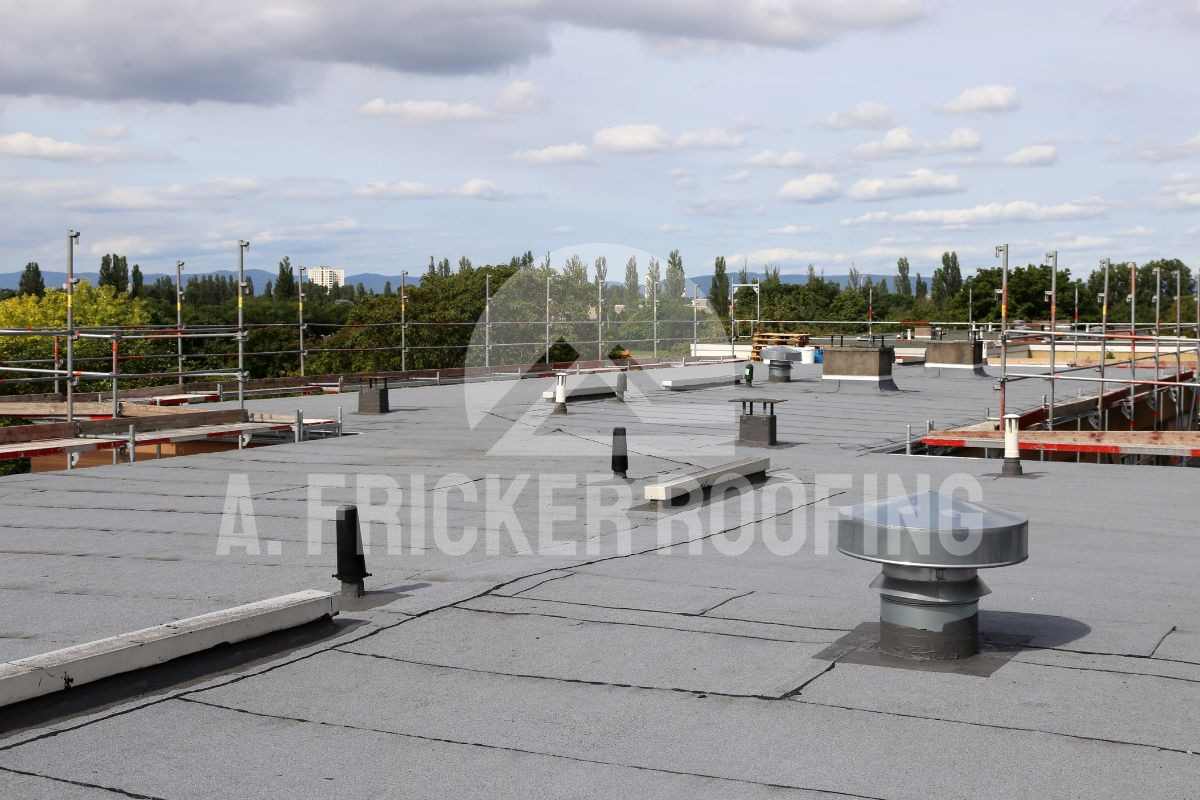
Tulsa puts commercial roofs through a lot. Summers push temperatures into the 90s, spring brings around 40 inches of rain each year, and the region sits squarely in Tornado Alley, where high-velocity winds and large hail can tear through a rooftop in a matter of minutes. The flat terrain around Tulsa makes things worse by giving the wind little resistance before it reaches your rooftop. For the warehouses, office buildings, and retail properties that make up much of the Tulsa metro, that kind of weather pressure adds up fast. A small seam separation or a section of lifted flashing might not look like much at first, but left unaddressed, it opens the door to leaks, damaged insulation, and repairs that become far more involved than they needed to be.
That is where professional roof repair for commercial properties makes a real difference. A. Fricker Roofing and Waterproofing has been working with building owners and property managers across Tulsa long enough to understand how local weather conditions affect the roofing systems most common in this area, including single-ply membranes and metal panels that have been in service for decades. When you notice something wrong with your roof, getting a qualified crew on-site quickly protects your facility, keeps your tenants dry, and prevents a manageable repair from turning into a much bigger project. That kind of fast response is what your property deserves.
How Commercial Roof Repair Works in Tulsa, OK
Knowing what to expect before work begins helps eliminate uncertainty and gives you a clear understanding of how the repair process will move forward from start to finish.
- Step 1: Problem Inspection
We begin with a thorough assessment of the reported issue and the surrounding roof areas. Seams, flashing, gaps, drainage points, and sections showing visible wear are all evaluated to determine how far the problem extends. We also look for contributing factors that may have accelerated the damage, so the repair addresses more than just the symptom. - Step 2: Diagnosis and Options Discussion
Once the inspection is complete, we explain our findings in straightforward terms and discuss the available solutions. You will understand what is causing the issue, how urgent it is, and which repair approach makes the most sense. If a limited repair can resolve the problem effectively, that option will be presented without recommending unnecessary work. - Step 3: Scale of Work and Quote
Before scheduling any repairs, we provide a detailed breakdown of the proposed work. This outlines the affected areas, the repair methods being used, and any materials required to complete the project. The goal is to give you a complete understanding of the work involved before the project begins. - Step 4: Professional Repair
The repair is completed using materials and techniques compatible with the existing roofing system. Whether the issue involves membrane damage, flashing failure, seam separation, or another roofing component, the work is performed with attention to long-term performance and minimal disruption to normal building activities. - Step 5: Quality Verification and Walkthrough
After the repair is finished, the completed work is reviewed to confirm that the original issue has been properly addressed. We walk you through the repaired areas, explain what was done, and answer any remaining questions so you have a clear understanding of your roof’s condition moving forward.
Common Roof Repair Issues in Tulsa, OK
Tulsa’s weather creates a predictable set of problems for commercial roofs, and knowing what you are dealing with helps you act before a minor issue becomes a serious one. The combination of strong seasonal winds, hail, and temperature changes puts specific stress on the parts of your roof that are already most vulnerable.
| Damage Type | Common Cause | Typical Priority Level |
|---|---|---|
| Membrane seam separations | Wind uplift and heat-driven expansion | High, leaks develop quickly |
| Lifted or buckled flashing | Edge wind pressure and fastener fatigue | High: water enters at the gaps |
| Cracked membrane surface | Summer heat followed by winter temperature changes | Moderate to high: depending on size |
| Hail impact punctures | Large hail is common in northeast Oklahoma | High: hidden damage can spread |
| Loosened panel edges on metal roofs | Repeated wind uplift cycles | Moderate: escalates without reinforcement |
Most of these repairs are best handled in spring or fall when moderate temperatures allow materials to bond properly and crews can work efficiently. Catching damage early, especially after a significant storm, keeps repairs targeted and your facility protected without requiring large-scale work.
Seam and Gap Reinforcement
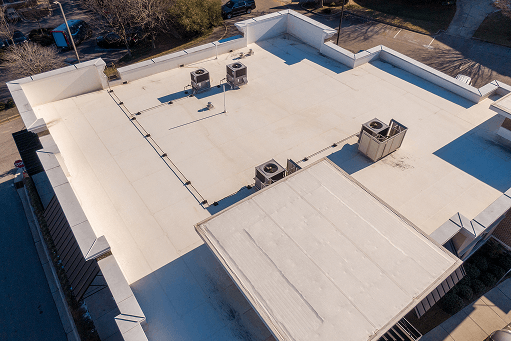
On flat and low-slope commercial roofs common across Tulsa, seams and roof gaps like vents, drains, and HVAC curbs are where leaks most often start. Reinforcing these areas during a repair adds durability where your roof is naturally most vulnerable to wind uplift and standing water.
Material Compatibility Matching
Repairs only hold long-term when the materials used match your existing roofing system. Whether your facility has a TPO membrane, an older single-ply system, or metal panels, the repair materials are selected specifically to work with what is already in place, not just whatever is on the truck.
Edge and Perimeter Fastening
The flat terrain around Tulsa gives wind a direct path to your rooftop, and the perimeter is where uplift hits hardest. Repairs include checking and securing edge details and perimeter fastening so your roof holds firm under the kind of windstorm this region regularly sees.
Drainage Path Verification
With around 40 inches of rainfall each year and heavy spring storms that can drop a lot of water in a short window, keeping drainage paths clear and functional is a real concern for commercial properties. During a repair visit, drainage points near the affected area are checked to confirm water has a clear path off your roof and is not pooling where it can cause further damage.

Get Commercial Roof Repairs Handled in Tulsa, OK
Tulsa’s weather does not let up, and commercial roofs in this region carry the evidence of that year after year. Between the wind pressure that works at seams and edges, the seasonal rainfall that finds any opening, and the temperature swings that stress materials over time, even a well-built roof benefits from fast attention. Addressing a repair now protects your facility, limits disruption to your tenants and business operations, and extends the life of a roofing asset that represents a real investment in your property. Scheduling a commercial roof inspection can also help identify developing issues before they require more extensive repairs.
A. Fricker Roofing and Waterproofing works with building owners and property managers across the Tulsa area who want straightforward answers and reliable work, not guesswork. If something on your roof looks off or you want a crew to take a closer look after a rough stretch of weather, reaching out is a simple first step. We are happy to talk through what you are seeing and help you figure out the right path forward, including whether silicone roof coatings may be a practical option for protecting and extending the life of your commercial roofing system.
Frequently Asked Questions
Got questions about your roof? We’ve got answers. From maintenance tips to insurance claims and repair timelines, our FAQ section covers the most common concerns homeowners have. Get informed and make confident decisions about protecting your home.
How do I know if my commercial roof has wind damage after a Tulsa storm, even if there are no visible leaks yet?
Leaks are often a lagging sign, not the first one. After a significant windstorm, look for lifted or bubbling membrane sections, flashing that has pulled away from walls or curbs, and any debris that has collected near the roof edge, which can indicate displaced materials. Because flat and low-slope roofs in Tulsa are especially exposed to wind uplift, seam separations can be present long before water works its way inside, so getting a crew on the roof quickly after a storm is the best way to catch damage before it develops into something bigger.
Can my building's roof be repaired while the facility is still operating, or do tenants and operations need to clear out?
In most cases, targeted commercial roof repairs do not require you to shut down operations or vacate tenants. Repairs are generally confined to specific sections of the roof, and the work is completed in a few hours to a single day, depending on the job’s scale. If a repair involves an area directly above occupied space with an active leak, coordinating a brief interior precaution may be worth discussing, but it rarely means halting business entirely.
Does a commercial roof repair in Tulsa ever require a permit, and is that something I need to manage myself?
Tulsa building codes do require permits for commercial roof repairs above a certain job scale, particularly work that involves structural elements or covers a significant portion of the surface of the roof. Minor patch repairs typically fall below that threshold, but larger repairs, especially those involving edge reinforcement or membrane replacement over a wider area, may trigger permit requirements. A qualified roofing contractor familiar with local code will know when a permit applies and can handle that process so you are not left navigating city requirements on your own.
We love hearing from our customers!
You don’t have to listen to what we say about the company, check out what others are saying!



schedule a consultation
Contact Form
allow us to earn your business!
