
Key Takeaways
- Prevent Ice Dams: Ensure proper attic insulation and adequate ventilation to maintain consistent roof temperatures, stopping uneven snow melt that causes ice dams.
- Upgrade Protection: Install ice and water shield at vulnerable eaves/valleys and replace damaged flashing to create a robust barrier against roof leaks caused by snow melt.
- Seasonal Prep: In fall, clean gutters, inspect shingles/flashing, and check attic insulation to prevent winter roof damage before snow arrives.
- Active Leak Steps: Contain water and protect belongings from active drips; call a professional (like A. Fricker Roofing) for assessment and repair.
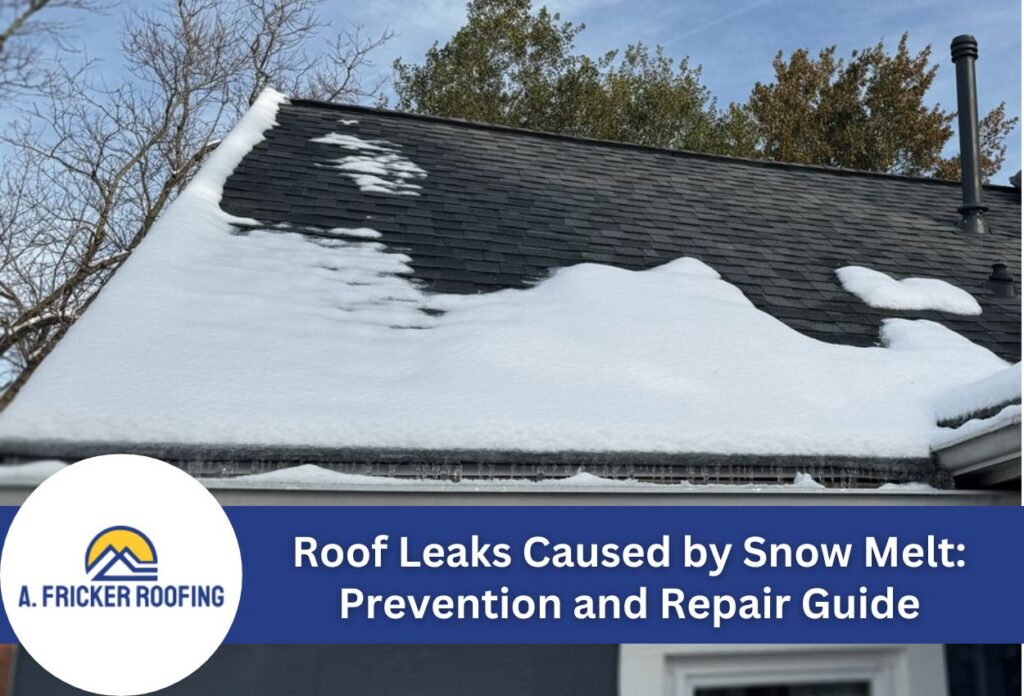
Roof leaks caused by snow melt create frustration and expensive damage for homeowners across cold-weather regions. When temperatures fluctuate during winter, snow accumulates on rooftops and undergoes repeated freeze-thaw cycles that expose weaknesses in roofing systems. The most common culprit behind snow melt leaks is ice dam formation, which occurs when heat from inside the home causes snow to melt on the upper portions of the roof. This melted water then refreezes at the eaves, where temperatures remain below freezing, creating a barrier that forces water underneath shingles and into the home.
Winter roof damage extends beyond ice dams to include problems with attic insulation and ventilation, both of which play important roles in preventing problematic melting patterns. Inadequate insulation allows heat to escape through the surface of the roof, while poor ventilation fails to maintain consistent temperatures across the entire roofing structure. Recognizing the warning signs early makes the difference between a simple roof leak repair and extensive interior water damage. Homeowners who understand the connection between melting snow and leaks can take proactive steps to protect their property throughout the coldest months of the year.
How Ice Dams Form and Trap Water on Your Roof
The science behind ice dam formation begins with heat loss from the living spaces below. When warm air escapes through inadequate attic insulation and ventilation, it heats the roof deck and melts snow from the bottom up. This melted water flows downward until it reaches the cold eaves, which extend beyond the home. At this colder edge, the water refreezes and gradually builds up into a ridge of ice. As this barrier grows, meltwater becomes trapped behind it with nowhere to drain. The pooled water then seeps beneath shingles, saturating underlayment and eventually finding its way into the home through ceiling gaps and wall cavities.
Ice dams most commonly develop along roof eaves where temperature differences are most extreme. Roof valleys concentrate flowing water and create particularly thick ice formations. North-facing sections and areas with poor insulation experience more pronounced temperature variations that accelerate the freeze-thaw cycle. Homes with complex roof lines featuring multiple angles and intersections face a greater risk because these architectural features create additional cold spots where ice accumulates. Understanding these vulnerable locations helps homeowners identify potential problem areas before winter roof damage occurs and roof leaks caused by snow melt require emergency attention.
Hidden Vulnerabilities That Make Your Roof Susceptible to Snow Melt Damage
Aging shingles lose their protective granules and flexibility over time, creating microscopic gaps where water infiltrates during freeze-thaw cycles. Damaged flashing around chimneys, vents, and roof gaps no longer forms watertight seals, allowing snow melt leaks to develop at these important junctions. Inadequate underlayment beneath shingles fails to provide the secondary barrier needed when water backs up behind ice formations. These weak points in roofing systems remain hidden until snow melt exposes them, often resulting in sudden interior water damage that requires immediate roof leak repair attention.
Architectural features create additional challenges for ice dam prevention and winter roof damage control. Low-slope sections lack the pitch necessary for proper drainage, causing water to pool rather than flow off the surface of the roof. Skylights interrupt the continuous plane of the roof and create pockets where snow accumulates and melts inconsistently. Chimneys generate heat that creates localized melting patterns while their flashing provides potential entry points for water. Valleys between roof planes channel concentrated water flow that overwhelms compromised materials. Without proper attic insulation and ventilation to maintain consistent roof temperatures, these architectural elements become prime locations where roof leaks caused by snow melt leak into protective barriers and damage interior structures.
The Important Role of Attic Insulation in Preventing Snow Melt Leaks
Proper attic insulation creates a thermal barrier that stops heated air from rising through the ceiling and warming the roof deck. When insulation levels meet recommended R-values for the climate zone, the surface of the roof stays cold, and snow accumulates without the uneven melting patterns that trigger ice dam formation. Without sufficient insulation, warm air escapes into the attic space and heats specific sections of the roof while leaving eaves and overhangs cold. This temperature imbalance causes snow to melt in warmer areas and refreeze at colder edges, creating the conditions for winter roof damage and leaks beneath shingles.
Adequate ventilation works in tandem with insulation to regulate attic temperatures throughout the winter. Ridge vents, soffit vents, and gable vents allow continuous airflow that removes any heat buildup and maintains consistent temperatures across the entire surface of the roof. This balanced system ensures snow melts evenly when outdoor temperatures rise rather than creating problematic pooling behind ice barriers. Homeowners experiencing roof leaks caused by snow melt should evaluate both insulation depth and ventilation capacity as part of their ice dam prevention strategy, since addressing one without the other provides incomplete protection against snow melt leaks and the resulting damage they cause.
Immediate Steps to Stop Active Leaks During Winter Weather
When a roof leak caused by snow melt becomes active, containing water damage from inside the home takes priority until professional repairs can be completed. Placing buckets or containers beneath drips captures water and prevents it from spreading across floors and saturating carpets. Moving furniture, electronics, and valuables away from affected areas protects belongings from water damage. Absorbent towels and blankets placed around leak sites soak up excess moisture and limit the area of impact. Opening attic access doors allows inspection of the leak source while providing airflow that reduces humidity buildup. These emergency measures minimize interior damage while weather conditions improve enough for permanent roof leak repair work to begin.
Contacting a roofing professional becomes necessary when leaks actively drip into living spaces or when visible water stains appear on ceilings and walls. Severe weather conditions may delay immediate repairs, but professionals can assess the situation and recommend temporary solutions that reduce ongoing damage. Signs requiring immediate professional attention include multiple leak locations, large volumes of water entering the home, and sagging ceiling materials that indicate structural saturation.
Long-Term Solutions to Protect Your Roof From Future Snow Melt Problems
Upgrading roofing materials provides a lasting defense against roof leaks caused by snow melt through multiple protective layers. Installing ice and water shield beneath shingles creates a waterproof membrane at vulnerable eaves and valleys where ice dams typically form. This rubberized underlayment adheres directly to the roof deck and seals around nail holes, preventing leaks even when it backs up behind ice formations. Replacing damaged flashing around chimneys, vents, and skylights eliminates entry points where snow melt leaks develop. Quality architectural shingles with proper installation resist wind-driven moisture better than aging materials. These roofing system improvements work together to block water intrusion during winter roof damage conditions.
Addressing attic conditions solves the root cause of uneven melting rather than simply managing symptoms after problems develop. Adding insulation to meet recommended R-values for the region stops heat loss that warms the surface of the roof and triggers problematic melt patterns. Installing adequate ventilation through ridge vents and soffit intakes maintains consistent temperatures across the entire roof deck. This combination prevents the temperature differential between upper roof sections and eaves that creates ice dam formation. Professional assessment identifies specific deficiencies in attic insulation and ventilation that contribute to recurring winter issues. Investing in these foundational improvements delivers effective ice dam prevention that protects roofing systems throughout cold-weather.
Seasonal Maintenance That Prevents Winter Roof Leaks Before They Start
Fall preparation tasks create the foundation for effective ice dam prevention before snow arrives. Cleaning gutters and downspouts removes leaves and debris that block proper drainage, ensuring meltwater flows away from the roof rather than backing up beneath shingles. Inspecting shingles for cracks, curling edges, and missing granules identifies weak points where snow melt leaks might develop once freeze-thaw cycles begin. Checking attic insulation levels confirms adequate thermal protection exists to prevent heat loss that causes uneven melting patterns. Examining flashing around chimneys and vents reveals gaps that need sealing before winter roof damage occurs. These proactive steps completed during mild weather prepare roofing systems to handle snow and ice accumulation without creating conditions for leaks.
Year-round monitoring of roof conditions and attic spaces helps detect developing problems before winter weather turns minor issues into emergencies. Regular visual inspections from ground level spot missing or damaged shingles that require replacement. Periodic attic checks reveal moisture stains, inadequate insulation depth, or blocked ventilation that contribute to roof leaks caused by snow melt. Addressing these concerns during spring and summer allows time for proper roof leak repair without the urgency and complications that accompany active leaks during snowfall. Homeowners who maintain consistent observation schedules reduce their risk of unexpected winter roof damage through early intervention.
Protect Your Home from Winter Woes with A. Fricker Roofing and Waterproofing
If you’re noticing signs of roof leaks caused by snow melt, it’s important to act swiftly to prevent further damage to your home. A. Fricker Roofing and Waterproofing specializes in identifying and repairing vulnerabilities in your roofing system that lead to leaks during the thawing periods of winter. Don’t wait for minor leaks to turn into significant water damage.
Whether it’s upgrading insulation to prevent ice dams or replacing damaged shingles, our expert team is equipped to handle all your roofing needs. Remember, proper maintenance and fast repairs are your best defense against winter roof damage.
Don’t let snow melt lead to expensive repairs. Call us today at (918) 402-7167 or visit our website at https://africkerroofing.com/ to schedule a consultation and ensure your roof is prepared to handle whatever winter throws its way.