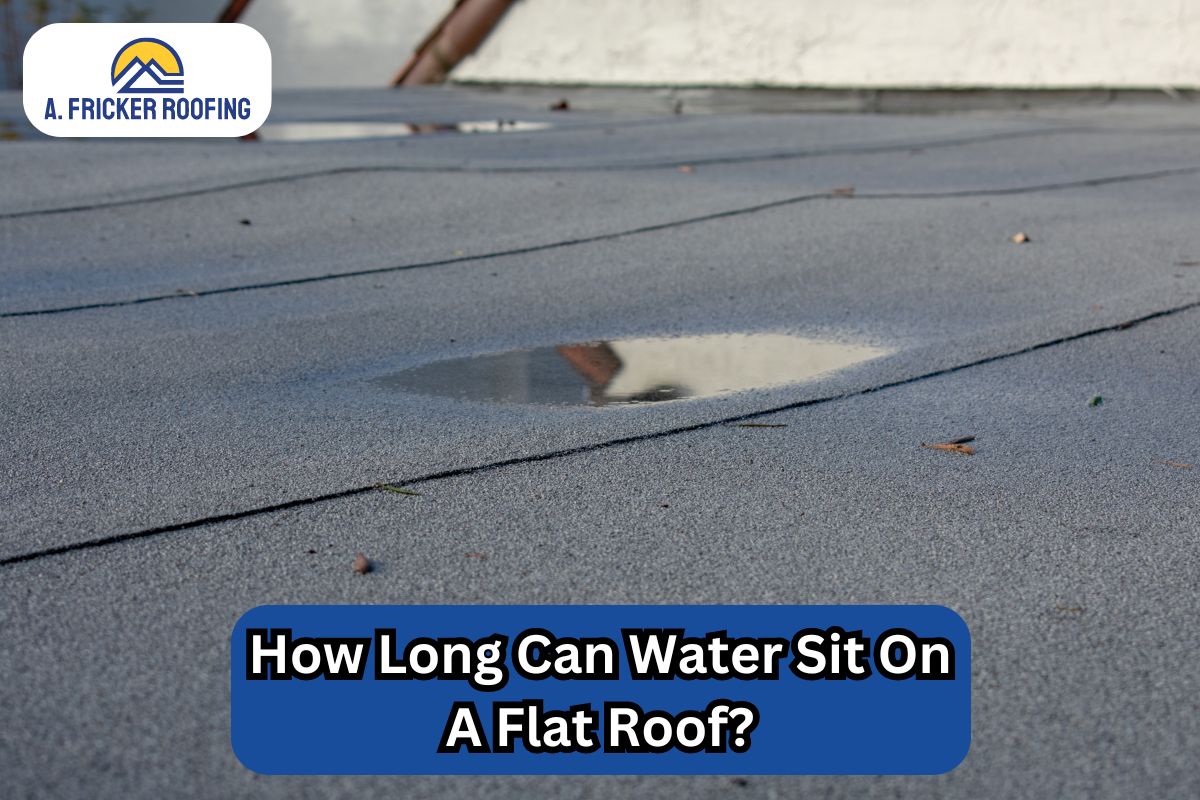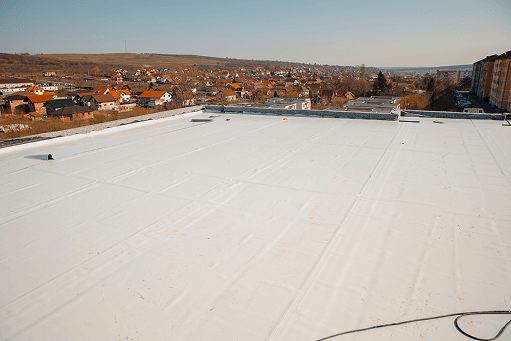


Ponding water on flat roofs creates serious problems that go far beyond one muddy puddle. When water sits on your roof for more than 48 hours after rainfall, it starts a cycle of damage that can compromise your entire building’s structure and safety.
Standing water on a flat roof adds excessive weight that stresses the building’s framework. This pooled water also accelerates the breakdown of roofing materials, creating weak spots where leaks develop. Over time, these flat roof drainage problems can lead to expensive repairs, mold growth inside your building, and structural damage that affects the entire property.
The causes of ponding water on roofs typically stem from poor drainage design, clogged drains, or slight depressions in the roof surface that trap water. Weather conditions common in Oklahoma, including heavy rainstorms and temperature fluctuations, make flat roof water pooling solutions even more critical for local property owners.
Fortunately, proven methods exist to prevent water accumulation on flat roofs. These solutions range from simple maintenance tasks that property owners can handle themselves to professional modifications that address underlying drainage issues. Understanding these options helps you choose the right approach before standing water transforms from a minor concern into an expensive extensive roof replacement or structural repairs.
Why Water Pools on Flat Roofs in the First Place
Understanding the root causes behind flat roof drainage problems helps property owners address standing water before it becomes a significant issue. Several structural and maintenance factors contribute to water pooling on mostly flat surfaces.
Structural issues are one of the primary causes of ponding water on flat roofs. Despite their name, flat roofs require a slight slope of at least 1/4 inch per foot to direct water toward drainage points. When roofs lack proper slope during installation, water naturally settles in low areas instead of flowing away. Building settlement over time can create new depressions where none existed before, while sagging sections develop from inadequate structural support or aging roof decking materials.
Drainage system failures compound these structural problems by preventing water from leaving the roof surface as designed. Clogged drains filled with leaves, debris, or sediment block water flow and create backups that spread across the roof. Damaged gutters with separations or improper pitch cannot channel water effectively, forcing it back onto the roof surface. Blocked scuppers, which serve as secondary drainage outlets, eliminate backup protection when primary drains become overwhelmed during heavy rainfall.
Identifying which factors affect your specific roof determines the most effective approach to prevent water accumulation on flat roofs during storms.
Quick Assessment: Is Your Ponding Problem Serious?
Determining the severity of standing water on a flat roof requires systematic evaluation using simple visual inspection techniques. Property owners can assess their flat roof drainage problems by examining water depth, coverage area, and duration after rainfall.
Begin the assessment by measuring water depth in pooled areas using a ruler or measuring tape 24 hours after rainfall stops. Water deeper than 1 inch indicates significant drainage issues that require immediate attention. Check the total area affected by ponding, as widespread water accumulation suggests systemic problems with roof slope or drainage capacity rather than isolated concerns.
It is also important to dcument how long water remains on the roof surface after storms. Standing water that persists beyond 48 hours signals serious flat roof water pooling solutions are needed to prevent structural damage and membrane deterioration.
Several warning signs indicate when ponding water has progressed from minor maintenance issues to urgent repair needs. Large puddles covering significant roof sections, water deeper than 2 inches, or ponding that occurs during light rainfall all represent serious concerns. Additionally, water that appears consistently in the same locations after every rain event suggests permanent depressions or structural sagging requiring professional intervention.
Property owners should also look for signs of membrane stress around ponded areas, including bubbling, cracking, or visible wear patterns. These indicators show that causes of ponding water on roofs have begun causing material failure, making immediate action necessary to prevent damage from spreading throughout the building structure.
Immediate Steps to Remove Standing Water
Removing pooled water from your flat roof requires immediate action and proper safety measures to prevent further damage while protecting both yourself and the roof surface. These emergency techniques help address standing water on a flat roof before professional repairs can be implemented.
Manual water removal starts with basic tools like a push broom, squeegee, or wet vacuum designed for outdoor use. Begin by sweeping water toward existing drains or roof edges using gentle, consistent strokes that avoid damaging the roof membrane. A large squeegee effectively moves substantial water volumes while distributing pressure evenly across the surface. For deeper pooling, a wet vacuum removes water efficiently without risking membrane punctures that buckets or sharp tools might cause.
Safety remains the top priority during manual removal. Wear non-slip shoes with good traction, avoid working on wet surfaces, and never attempt removal during active storms windy conditions. Test roof stability before walking on areas with deep standing water, as prolonged ponding may have weakened the underlying structure.
Emergency drainage techniques provide temporary solutions when flat roof drainage problems overwhelm existing systems. Clear visible debris from drain openings using gloved hands rather than sharp objects that could damage drain components. Create temporary water channels using pool noodles or flexible tubing to direct water flow toward functional drains or safe discharge points. These solutions help prevent water accumulation while waiting for professional repairs that address the underlying causes of ponding water on roofs.
Permanent Fixes for Minor Ponding Issues
Professional solutions address the underlying structural causes behind flat roof drainage problems through targeted modifications that create proper water flow patterns. These permanent repairs eliminate recurring ponding by correcting slope deficiencies and improving drainage capacity where water consistently accumulates.
Tapered insulation systems provide the most effective method for correcting inadequate roof slope without major structural modifications. Professional contractors install specially designed insulation boards that increase in width to create drainage paths toward existing drains. This approach transforms flat areas into sloped surfaces with the recommended 1/4 inch per foot grade needed for effective water flow. The tapered system works particularly well for standing water caused by minor depressions or inadequate original slope design.
Installing additional drainage components addresses areas where existing systems cannot handle water volume or reach problem zones. Strategic placement of new drains, scuppers, or overflow systems creates multiple water exit points that prevent accumulation in distant roof sections. Secondary drains positioned in chronic ponding areas provide dedicated drainage for problematic zones, while overflow scuppers offer backup protection when primary systems become overwhelmed during heavy rainfall.
These flat roof water pooling solutions work together to create comprehensive drainage networks that prevent water accumulation on flat roofs. Professional installation ensures proper integration with existing roof components while maintaining membrane integrity. The combination of improved slope through tapered insulation and enhanced drainage capacity effectively eliminates the causes of ponding water on roofs that lead to structural damage and major repairs.
When Ponding Points to Bigger Problems
Persistent ponding water often signals underlying structural issues that extend beyond simple drainage maintenance. When flat roof drainage problems continue despite cleaning efforts and basic repairs, the root causes typically involve serious structural damage that require professional assessment and reconstruction.
Structural sagging is one of the most serious issues behind standing water on a flat roof. Over time, inadequate support beams, deteriorating roof decking, or excessive load bearing can create permanent depressions where water naturally collects. These sagging areas continue expanding as pooled water adds weight and accelerates structural deterioration. Foundation settling also contributes to roof deformation, creating new low spots and disrupting existing drainage patterns that once functioned properly.
Membrane damage becomes both a cause and a consequence of chronic ponding issues. Prolonged water exposure breaks down roofing materials, creating weak spots that allow moisture into the building structure. These compromised areas often expand around ponding zones, leading to widespread membrane failure that makes patch repairs ineffective.
Age-related deterioration significantly affects how well flat roof water pooling solutions perform over time. Older roofing systems lose their ability to shed water effectively as materials shrink, crack, and separate. When repair costs for addressing multiple causes of ponding water on roofs approach the replacement value, full roof reconstruction becomes the more economical choice. A professional evaluation helps determine whether continued repairs can prevent water accumulation on flat roofs or if complete replacement offers better long-term protection and value.
Preventing Future Water Accumulation Problems
Having maintenance protocols prevents the return of flat roof drainage problems and protects your investment from recurring water damage. These preventive strategies address potential issues before they compromise building integrity.
Regular maintenance is the first step of effective water accumulation prevention. Monthly drain inspections ensure debris removal before blockages develop, while quarterly membrane examinations identify early signs of wear or damage around previous ponding areas. Post-storm assessments within 24 hours help detect new drainage issues caused by heavy rainfall, wind damage, or debris accumulation. Schedule professional inspections twice yearly to evaluate overall roof performance and identify subtle changes in drainage patterns that property owners might miss.
Protective coatings can significantly improve the membrane’s resistance to water damage while extending overall roof life. Elastomeric coatings create seamless barriers that reflect heat and resist deterioration from ponding water. These specialized coatings fill minor cracks and imperfections that could develop into larger problems, while providing additional protection in areas prone to occasional water accumulation.
Membrane reinforcement strategies target vulnerable areas where standing water previously caused damage. Installing additional membrane layers or upgraded materials in chronic ponding zones creates enhanced protection against future water exposure. These flat roof water pooling solutions work together with improved drainage systems to prevent water accumulation that leads to structural damage and expensive emergency repairs throughout the building’s lifespan.
Expert Solutions for Ponding Water on Flat Roofs by A. Fricker Roofing and Waterproofing
At A. Fricker Roofing and Waterproofing, our team can resolve any flat roof drainage problems, ensuring your property remains safe and dry. We have the right tools and expertise to implement both immediate and long-term solutions based on your specific needs.
Take action today by calling us at (918) 402-7167 for a comprehensive assessment and effective resolution to your flat roof water pooling challenges. Trust A. Fricker Roofing and Waterproofing to restore and protect your investment with precision and care.