
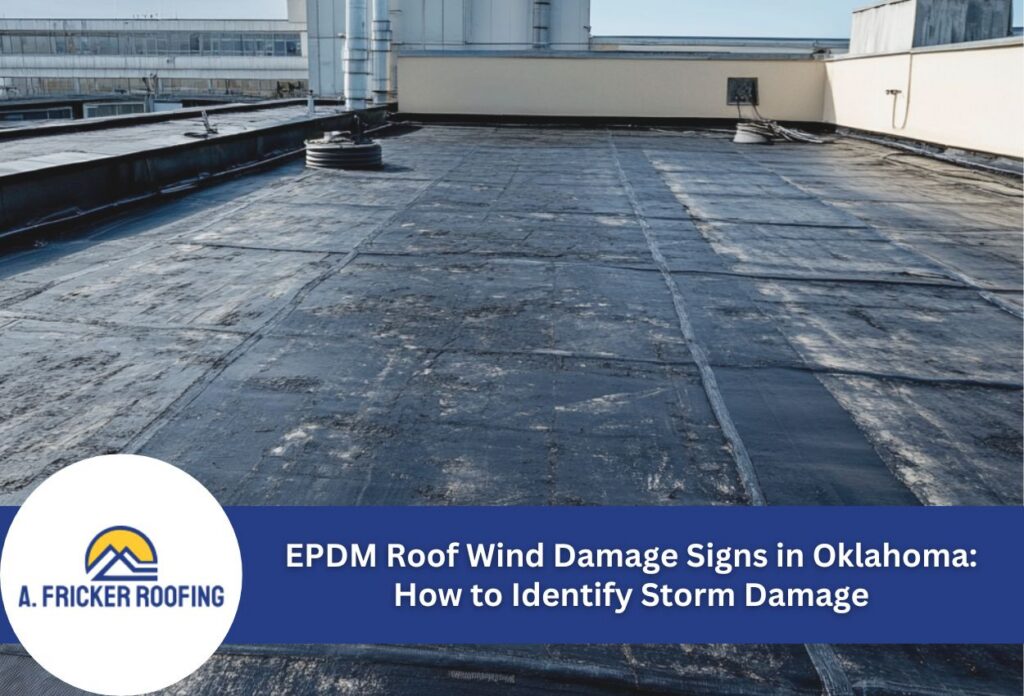

Oklahoma’s severe weather creates unique challenges for EPDM roofing systems. High winds, sudden storms, and intense weather patterns common throughout the state can compromise rubber membrane roofs in ways that aren’t always immediately visible. EPDM roof wind damage signs in OK often start small but escalate quickly when left unaddressed, leading to interior water damage and expensive structural repairs.
EPDM, or ethylene propylene diene monomer, is a synthetic rubber roofing material popular for flat and low-slope commercial buildings. While EPDM roofs offer excellent durability and weather resistance, wind forces interact with rubber membranes differently than traditional shingles or metal roofing. During Oklahoma windstorms, the flexible nature of EPDM can work both as an advantage and a vulnerability. Understanding rubber roof storm damage indicators helps property owners catch problems early, when flat roof wind damage inspection reveals issues that are still manageable. Recognizing the specific signs of wind-damaged commercial roofing systems means the difference between a simple EPDM roof repair after windstorms and a complete roof replacement. Early detection of EPDM membrane wind uplift damage protects both the building and the bottom line.
Visible Surface Damage and Membrane Displacement
Wind uplift creates significant stress on EPDM roofing systems, often causing visible damage along vulnerable points. EPDM membrane wind uplift damage typically appears first at seams and perimeters, where the bond between the rubber membrane and roof deck weakens under repeated wind pressure. Property owners should inspect for lifted or peeling edges around roof borders, flashings, and seam lines. These areas show early signs of wind-damaged commercial roofing systems, as the membrane pulls away from its adhesive bond. Bubbling or billowing sections indicate areas where wind has separated the membrane from the roof deck below.
Punctures, tears, and holes represent another category of rubber roof storm damage indicators. Oklahoma’s severe weather frequently propels debris across roofing surfaces, creating openings in the membrane. Tree branches, gravel, metal fragments, and other airborne materials puncture the rubber during storms. A thorough flat roof wind damage inspection should examine the entire membrane surface for these breaches. Even small tears allow leaks to form that compromise the insulation and the roof deck. Recognizing these EPDM roof wind damage signs in OK enables fast EPDM roof repair after a windstorm, preventing extensive interior damage.
Fastener and Flashing Problems After Windstorms
Wind uplift forces place enormous stress on the mechanical fasteners and plates that secure EPDM membranes to roof decks. After Oklahoma windstorms, fastener plates often pull partially loose or back out from their original positions, creating vulnerable spots in the roofing system. These attachment points become weak links when wind gets underneath the membrane and creates upward pressure. Property owners should check fastener rows for raised plates, missing screws, or visible gaps between the fastener and membrane surface. Rubber roof storm damage indicators frequently include fasteners that appear intact from a distance but have loosened enough to compromise the membrane’s wind resistance. This type of EPDM membrane wind uplift damage requires immediate attention to prevent progressive failure across larger roof sections.
Metal flashing around gaps, edges, and transitions is equally susceptible to wind damage. High winds bend, separate, or completely detach flashing components that protect important roof areas. A full flat roof wind damage inspection should examine flashing at HVAC units, vent pipes, parapet walls, and roof edges for signs of movement or separation. When flashing pulls away from the membrane, wind can infiltrate underneath and accelerate deterioration. Bent or twisted flashing pieces indicate the roof has experienced significant wind forces. Identifying these EPDM roof wind damage signs in OK allows for targeted EPDM roof repair after windstorms before water intrusion causes structural problems.
Standing Water and Drainage Issues Following Strong Wind
Wind forces can alter the structural integrity of EPDM roofing systems in ways that affect water drainage patterns. After Oklahoma windstorms, property owners may notice new ponding areas that weren’t present before the storm. These low spots develop when wind shifts insulation beneath the membrane or compresses roof sections unevenly. EPDM membrane wind uplift damage sometimes creates subtle depressions that collect water after rainfall. Standing water that remains on a flat roof for more than 48 hours accelerates membrane deterioration and increases the weight on structural components. A proper flat roof wind damage inspection includes checking for changed water flow patterns and new accumulation zones that signal underlying damage to the roof assembly.
Drainage systems themselves often sustain damage during winds that contribute to water problems. Wind-blown debris frequently blocks drains, scuppers, and gutters, preventing proper water drainage from the roof’s surface. Leaves, branches, roofing materials from neighboring buildings, and other storm debris accumulate around drainage points and create dams that trap water. These blockages add to the existing rubber roof storm damage indicators by allowing water to pool against already compromised membrane areas. Damaged drain components or displaced drain rings also prevent effective drainage. Recognizing these EPDM roof wind damage signs in OK is essential for quick EPDM roof repair after windstorms, as standing water quickly transforms minor damage into major leaks.
Interior Warning Signs of Wind Damage
Wind damage to EPDM roofing systems doesn’t always remain confined to the exterior surface. Interior indicators often provide the first evidence that wind has compromised the membrane and allowed leaks to form. Water stains on ceilings represent one of the most obvious rubber roof storm damage indicators, appearing as discolored patches, rings, or streaks that darken over time. These stains typically develop near roof gaps, along seams, or at perimeter walls where EPDM membrane wind uplift damage creates openings. Active drips during or after rainstorms confirm that wind has breached the roofing system. Moisture on interior walls, particularly near the roofline, signals lateral water movement through compromised areas. Property owners conducting a flat roof wind damage inspection should check ceiling tiles, drywall, and structural components for dampness, soft spots, or visible mold growth that indicates ongoing water intrusion from wind-damaged sections above.
Energy performance changes can also reveal hidden signs of wind-damaged commercial roofing systems. When wind creates gaps in the EPDM membrane or separates insulation layers, conditioned air escapes through the compromised areas. Property owners may notice unexpected increases in heating or cooling costs following Oklahoma windstorms. Drafts near ceiling fixtures, HVAC vents, or upper-floor spaces are signs of an air leak through wind-created openings in the roof assembly. Temperature inconsistencies between rooms or floors suggest insulation has shifted or become saturated due to EPDM roof wind damage. These performance issues warrant immediate EPDM roof repair after a windstorm to restore the building’s structural integrity and prevent escalating energy waste.
Conducting a Proper Post-Storm Roof Inspection
Safety must be the priority when assessing potential EPDM roof wind damage signs in OK after severe weather. Property owners should begin with a ground-level visual inspection using binoculars to examine the roof perimeter, edges, and visible membrane sections without climbing onto the structure. Look for obvious rubber roof storm damage indicators such as lifted corners, displaced flashing, debris accumulation, or sagging areas. Check the building interior for water stains, drips, or moisture before accessing the roof. If roof access is necessary and safe, use proper fall protection equipment and avoid walking on wet or potentially compromised membrane sections. Never conduct inspections during weather, high winds, or when lightning is present. Document all observations with photographs and notes, including the date and specific locations of damage.
Professional roofing contractors should be contacted whenever EPDM membrane wind uplift damage is suspected or when damage extends beyond minor surface issues. Commercial roofing specialists have the training and equipment to safely perform a full flat roof wind damage inspection procedures that identify hidden problems beneath the membrane surface. Professional documentation is essential for insurance claims related to signs of wind-damaged commercial roofing systems, as insurers require detailed assessments with measurements, photographs, and material specifications. Contractors can determine whether repairs or replacement are necessary and provide accurate estimates for EPDM roof repair after a windstorm. Contact a qualified roofing professional immediately when interior leaks are present, when membrane sections have separated, or when the extent of damage is unclear from initial observations.
Immediate Steps to Protect Your Roof After Wind Damage
Once EPDM roof wind damage signs in OK have been identified, taking immediate protective action prevents minor problems from escalating into major structural issues. Property owners should first address active leaks by placing containers beneath drips and moving valuable equipment or inventory away from compromised areas. For accessible exterior damage, temporary waterproof tarps can be carefully placed over torn or lifted membrane sections to block leaks until professional repairs can be scheduled.
Secure tarps with sandbags or weighted objects rather than puncturing the membrane with additional fasteners. Remove debris from the surface of the roof and drainage systems to restore proper water flow and prevent ponding.
Clear blocked drains, scuppers, and gutters of leaves, branches, and storm materials that trap water against damaged areas. These temporary protective measures limit water intrusion and secondary damage while arrangements are made for professional evaluation and permanent EPDM roof repair after a windstorm.
Documentation is equally important during this initial response phase. Photograph all rubber roof storm damage indicators from multiple angles before applying temporary protective measures. Record the date, time, and weather conditions when damage was discovered. Keep detailed notes about interior water damage, including affected areas and items. This documentation supports insurance claims and helps roofing professionals understand the full scale of EPDM membrane wind uplift damage. Contact your insurance provider quickly to report the damage and inquire about coverage for signs of wind-damaged commercial roofing systems.
Avoid making permanent repairs before the insurance adjuster completes their inspection, as this may complicate the claims process. Schedule a professional flat roof wind damage inspection as quickly as possible to assess the complete extent of damage and develop a repair plan.
Understanding the EPDM Roof Repair Process
The timeline for EPDM roof repair after a windstorm varies based on damage severity, weather conditions, and contractor availability. Minor repairs such as patching small tears or resealing lifted seams may be completed within 1 to 2 days once materials are obtained and weather permits. More extensive EPDM membrane wind uplift damage requiring large section replacements or multiple fastener repairs typically takes 3 to 5 days. Complete membrane replacement projects for severely compromised systems may extend over 1 to 2 weeks, depending on building size and complexity. Oklahoma weather patterns significantly influence repair schedules, as EPDM installation requires dry conditions and moderate temperatures for proper adhesive curing. Contractors cannot perform permanent repairs during rain, high winds, or extreme temperature conditions, which may delay work despite urgent needs.
Several factors determine the scale of restoration work needed for rubber roof storm damage indicators. The age and overall condition of the existing EPDM system influence whether localized repairs suffice or complete replacement becomes necessary. Newer roofs with isolated wind damage typically respond well to targeted repairs, while older systems showing widespread signs of wind-damaged commercial roofs may warrant full replacement. The extent of roof deck damage beneath the membrane affects repair complexity, as compromised insulation or roof decking requires additional work beyond membrane restoration. Insurance coverage provisions also shape repair decisions, as policies may specify repair methods or material requirements. A thorough flat roof wind damage inspection by qualified professionals provides an accurate assessment of these factors and establishes realistic expectations for restoring your commercial roofing system.
Expert EPDM Roof Repair Services in Oklahoma
If you’ve noticed any of the signs of wind damage on your EPDM roof, it’s important to act quickly to prevent further damage and expensive repairs. From lifted edges and punctures in the membrane to loose fasteners and interior water stains, each indicator suggests that your roof may be compromised. Don’t let wind damage threaten the structural integrity of your building or the safety of its occupants.
Contact A. Fricker Roofing and Waterproofing today for a full inspection and expert repairs. Our skilled team has extensive experience with EPDM systems, particularly in handling the unique challenges posed by Oklahoma’s weather. Early detection and professional repairs can save you from future headaches and expenses.
Don’t wait for the next storm to discover the extent of the damage. Call us now at (918) 205-4447 or visit https://africkerroofing.com/ to schedule your roof inspection and repair.