
Leading Roofing Contractor in Oklahoma
Commercial Roof Repair in Wagoner, OK
4.9 Stars - Based on 708 User Reviews
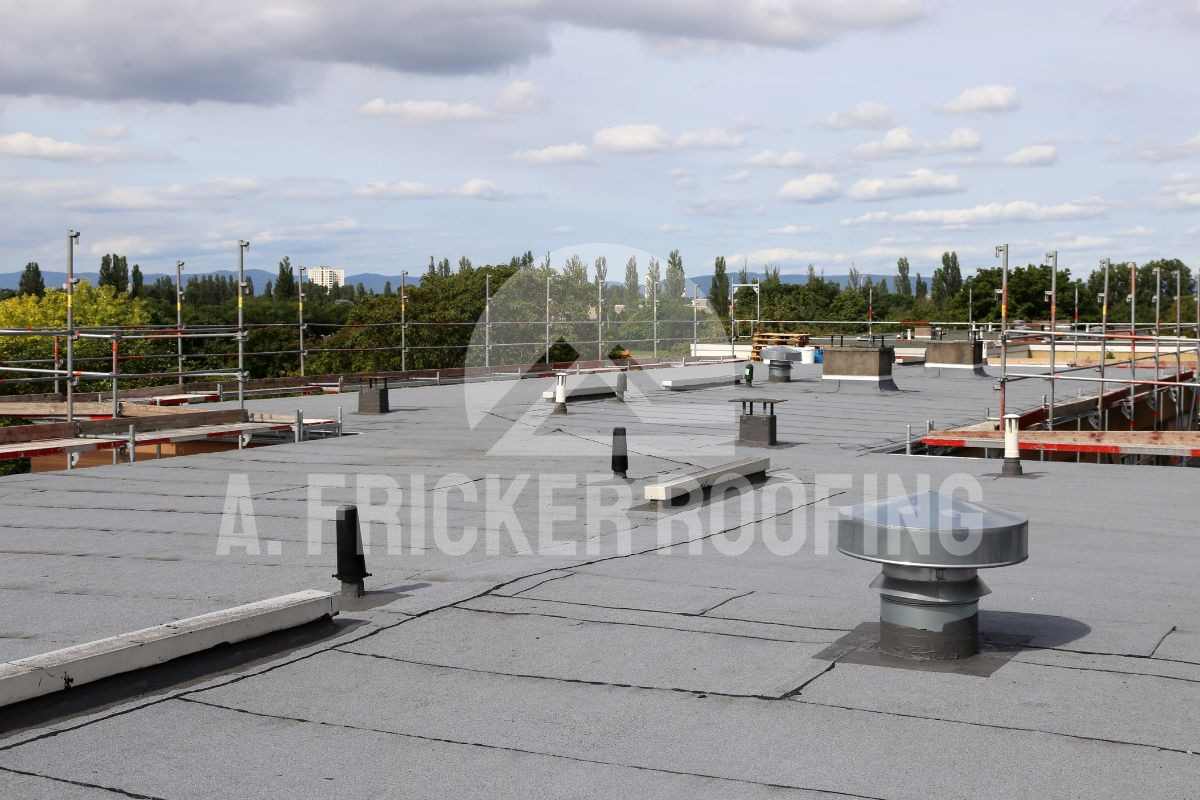
Wagoner sits in a part of Oklahoma where the weather rarely gives commercial roofs a break. Summers push temperatures into the 90s, and the humidity coming off Wagoner Lake and Fort Gibson Lake accelerates UV damage and encourages moss and algae growth on roofing membranes. Then winter arrives with temperature changes that cause flashing and sealants to crack and separate. Add in the region's severe storm seasons, with hail and high winds that can punch through flat roofing surfaces and compromise metal systems, and you have a set of conditions that will expose any weak point in your roof quickly. Left unaddressed, small vulnerabilities turn into active leaks that threaten your building's interior, your tenants, and your daily business operations.
That's where targeted, professional roof repair work makes a real difference. A. Fricker Roofing and Waterproofing works with property owners and facility managers throughout Wagoner County to find problems fast and fix them the right way, whether that means patching a puncture in a TPO membrane, resealing flashing on a metal roof, or addressing ponding water issues on a low-slope system. The goal is always to stop damage early, protect your property, and keep your building operational without unnecessary downtime. With the right repairs done on schedule, your roof can hold up to everything this region throws at it year after year.
How Commercial Roof Repair Works in Wagoner, OK
Commercial roof problems can disrupt operations and create uncertainty if you do not know what comes next. Here is how A. Fricker Roofing and Waterproofing approaches the repair process, from the initial assessment through the final review.
- Step 1: Problem Inspection
We begin with a detailed evaluation of the roof to determine the source and extent of the issue. Areas around seams, flashing, drainage components, gaps, and sections showing visible deterioration are examined carefully. We document our findings along the way so there is a clear understanding of the roof's condition before any repair recommendations are made. - Step 2: Diagnosis and Options Discussion
After the inspection, we review the results with you and explain the situation in straightforward terms. You will understand what is contributing to the problem, how it may affect the roof moving forward, and which repair solutions are available. If a localized repair can resolve the issue effectively, we will recommend that option rather than suggesting unnecessary work. - Step 3: Scale of Work and Quote
Once the repair approach is determined, we prepare a detailed plan outlining the work involved. This includes the affected roof areas, the repair methods being used, anticipated materials, and project expectations. The accompanying quote provides a complete picture of the work before scheduling begins, allowing you to move forward with confidence. - Step 4: Professional Repair
The repair is completed using materials compatible with the existing roofing system and techniques appropriate for the specific issue being addressed. Whether the work involves membrane restoration, flashing corrections, seam repairs, or drainage-related concerns, the focus remains on restoring reliable performance while minimizing disruption to building operations. - Step 5: Quality Verification and Walkthrough
After the repair is complete, we perform a final review of the repaired areas to confirm that the work has been completed as intended. We then walk through the project with you, explain what was addressed, and answer any remaining questions so you have a clear understanding of the completed repair and the roof's current condition.
Common Commercial Roof Issues in Wagoner, OK
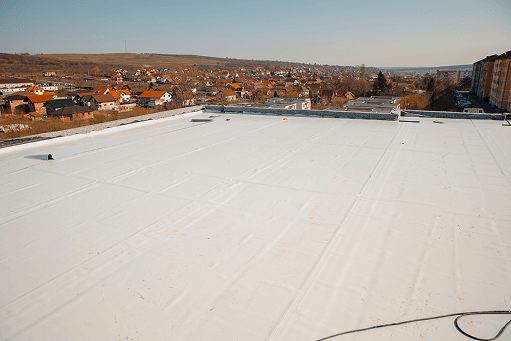
Flat and low-slope commercial roofs in Wagoner deal with a specific set of problems driven by the region's heat, humidity, and storm activity. Understanding what typically causes repairs helps you act before a minor issue grows into something that disrupts your operations.
| Issue Type | Common Cause | Urgency Level |
|---|---|---|
| Membrane punctures or tears | Hail impact or wind-driven debris during storm season | High: repair quickly to prevent active leaks |
| Ponding water | Irregular slope or blocked drains on flat roof surfaces | High: standing water accelerates membrane degradation |
| Flashing and sealant failure | Temperature changes and wind stress at roof edges and gaps | Moderate to high: depending on exposure |
| Metal roof corrosion | Prolonged humidity, particularly near Wagoner Lake | Moderate: liquid-applied coatings can extend service life |
| Seam separation on TPO or modified bitumen | UV exposure and heat buildup during extended 90-degree periods | Moderate: gets worse quickly if left unaddressed |
Catching these issues early keeps repairs manageable. Inspections, performed twice a year and timed before spring storm season and again in early fall, give you the best opportunity to spot sealant failures, membrane wear, and drainage problems before they affect the interior of your facility.
Membrane System Compatibility
Not every commercial roof is built the same, and repairs need to match the specific system already in place. Whether your facility has a TPO, PVC, modified bitumen, or built-up roofing system, the materials and methods used for the repair are selected to work with your existing roof rather than against it.
Liquid-Applied Coating Restoration for Metal Roofs
Metal roofs near Wagoner Lake face accelerated corrosion from prolonged humidity, and full replacement is not always necessary. Liquid-applied coatings bond directly to the metal surface to stop corrosion, seal minor gaps, and extend the service life of the system at a fraction of the cost of a tear-off.
Drain and Slope Correction
Ponding water on flat commercial roofs does not just go away on its own, and clearing a blocked drain or re-pitching a low spot can make a significant difference in how long your membrane lasts. Addressing drainage as part of a repair prevents the same area from breaking down again after the next heavy rain.
Emergency Storm Response
Hail and high winds are a regular part of life in Wagoner County, and damage to flashing, membranes, and seams often needs attention the same day to keep water out of your facility. A. Fricker Roofing and Waterproofing responds quickly after severe weather to get your roof stabilized and your building protected before further damage sets in.

Schedule Your Commercial Roof Repair in Wagoner, OK
Wagoner's weather puts real pressure on commercial roofing systems year-round. The heat and humidity that build up through summer, combined with the temperature swings that arrive each winter, gradually wear down membranes, sealants, and flashing in ways that are easy to overlook until water is already getting in. Staying ahead of that cycle protects your facility, reduces the risk of disruption to your tenants and operations, and extends the working life of your roof without the expense of premature replacement.
A. Fricker Roofing and Waterproofing is ready to help property owners and facility managers serving the Wagoner area keep their roofs in solid shape. If you have noticed a leak, visible membrane wear, or just want a roof inspection before the next storm season, reach out and let us take a look.
Frequently Asked Questions
Got questions about your roof? We’ve got answers. From maintenance tips to insurance claims and repair timelines, our FAQ section covers the most common concerns homeowners have. Get informed and make confident decisions about protecting your home.
Why do flat commercial roofs in Wagoner seem to develop new problems every spring, even after repairs?
The stretch from late fall through winter puts a lot of stress on sealants and membrane seams as temperatures shift repeatedly, and those small movements gradually open up gaps that were not obvious during the previous repair. By the time spring storm season arrives, wind-driven rain finds those weak points quickly. Scheduling a roof inspection in early spring, before severe weather picks up, lets you catch what winter left behind before it turns into an active leak during the busiest part of storm season.
Does the proximity to Wagoner Lake actually affect how often a commercial roof needs repairs?
It does, and it is something property managers near the lake notice over time. The sustained humidity close to the water accelerates corrosion on metal roofing systems and promotes algae and moss growth on membrane surfaces, both of which break down the material faster than you would see in a drier environment. Buildings within a few miles of the lake tend to need more frequent sealant and coating attention than facilities further inland, so factoring that into your maintenance schedule makes a real difference in how long the roof holds up between repairs.
What should a property manager do immediately after a hail storm before a roofer can get on-site?
Check the interior of your facility first, looking for any water staining on ceiling tiles, wet insulation, or drips near roof gaps like HVAC units and skylights, and document what you find with photos. Avoid going onto the roof yourself, since hail impact can create punctures that are not always visible from a distance, and the surface may be slippery or unstable in damaged areas. Having that interior documentation ready when the roofer arrives helps pinpoint exactly where to start the inspection and speeds up the process of getting repairs set and scheduled.
We love hearing from our customers!
You don’t have to listen to what we say about the company, check out what others are saying!



schedule a consultation
Contact Form
allow us to earn your business!
